
planting garlic winter solstice
June 22, 2011 § 2 Comments

It is the darkest day of the year today, the winter solstice. I’m so happy that from here on in things are only going to get brighter.
A wonderful thing to do on the shortest day of the year is plant garlic. So much to look forward to as each clove is pushed an inch deep into the ground. By the summer solstice they will be ready to harvest and you will have fresh garlic all of your own.

How to grow garlic
You can take any old garlic that you have bought from the shop, especially those that have begun to sprout, however, I prefer to use organic and the lovely fragrant purple varieties.

Choose a sunny, well-drained position with good fertile soil. I like to plant garlic around the borders of the vegie garden as they are great at keeping away pests and disease.
Separate all the cloves, leave the skins on, and plant about 15 cm apart, an inch deep, or so the top/pointy part of the clove is 2 cm bellow the surface. Cover with soil and wait patiently, they will take quite a few months before they are ready.

Each clove will grow into a plant that will contain a single bulb that can itself have up to 20 cloves.
You will know your garlic is ripe to harvest when the tops of the plant begin to dry off and die. If you harvest them to early your bulbs will be small, too late and they will split. A general rule is, plant them on the shortest day of the year and harvest them on the longest.
Your garlic will then need to be hung to dry in a cool dark place for 1-2 weeks. You can then brush the dirt off. It is best not to wash them.
Here is one I snuck in about 2 weeks ago, they don’t take long to sprout.

Preserving Olives
June 13, 2011 § 11 Comments

We live in one of the old Greek and Italian neighbourhoods of Melbourne. One of those suburbs that every now and again sport concrete lawns dotted with olive and lemon trees. A very particular aesthetic that I myself am not particularly partial to but nevertheless, I appreciate the mini suburban farms even though embedded in a cement landscape of which I can only imagine is a good way of keeping out the weeds. I am lucky enough to enjoy the advice of an old greek man who sometimes happens by when I’m in the front yard. He leans over the fence, a subtle aroma of cigarettes, commenting on the progress of our orange tree and the vegies in the garden. I enjoy the aged and wisened advice, it is the stuff I cherish most.
So it is at this time of year that trees are heavy with black fruit and the markets and grocers are brimming with plump and round olives.
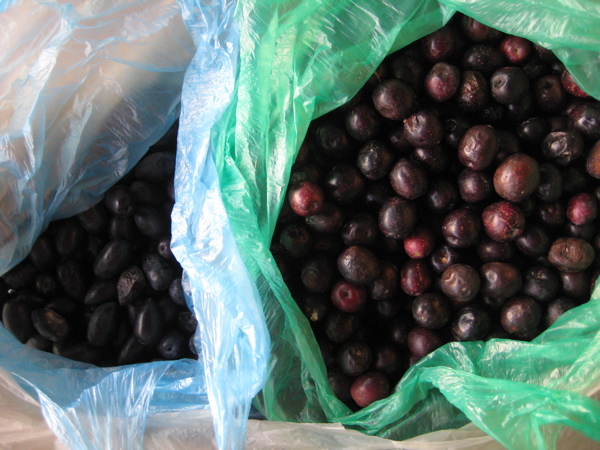

I have never pickled olives before, and from a little research, have learned there is more than one way of going about it. Jim Massoto gives a wonderful step by step set of instructions and advice which you can find here. However his process takes 20 days in which you soak the olives in briny water that you change every day.
We decided, to go for a rather simpler option that a friend let us in on after he was given the advice from an olive seller at Preston Markets. With this method you may end up with olives that are slightly more bitter, but after tasting our friends and considering this process was much nicer on the environment as less salt would be poured down the drains, we were convinced. Also, it’s no where near as much hassle.
How to preserve olives
First, you want to make sure you pickle your olives when they are as fresh as you can get them as they are quick to spoil. Pick out any bruised or spoiled olives as they have an off flavour.
Sterilize a bunch of big jars. Wash the olives thoroughly and place in the jars. Cover with briny water (100 g salt dissolved per 1 litre water). Then pour a layer of olive oil on the top of the water and seal tightly. The fuller the better, as the less air inside the jar, the less likely they will contaminate. Leave in a dark cool place for about 3 – 4 months or until they develop a rich olive flavour. A layer of scum will develop at the top of the jar, however this is said to be helpful in taking away the bitterness of the olives.


And we wait, fingers crossed.
the first of kale
May 30, 2011 § 3 Comments
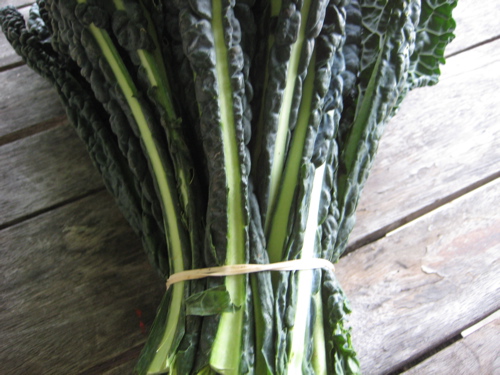
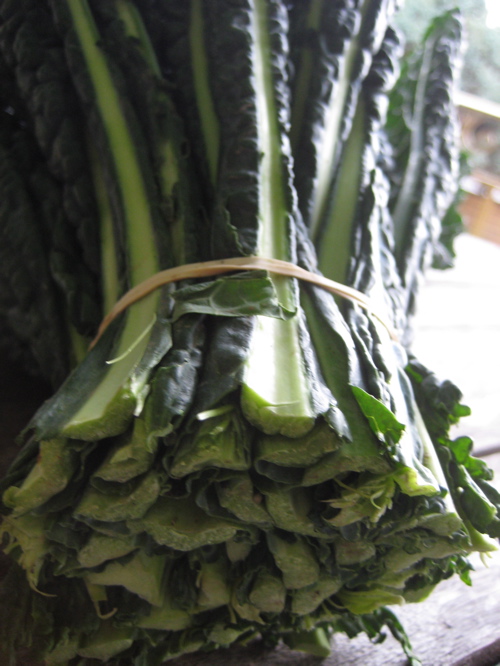 Kale is in season!
Arriving in our bountiful vegie boxes fresh from Ceres Fair Food it brings a smile to my heart. There is something comforting about the grandma skin like leaves, green and dusty grey, krinkled like a well worn landscape. Its tough and rubbery exterior is deceiving. When cooked its facade melts as it turns deep green, softly crunchy and tangy.
Here is how I ate my first winter kale.
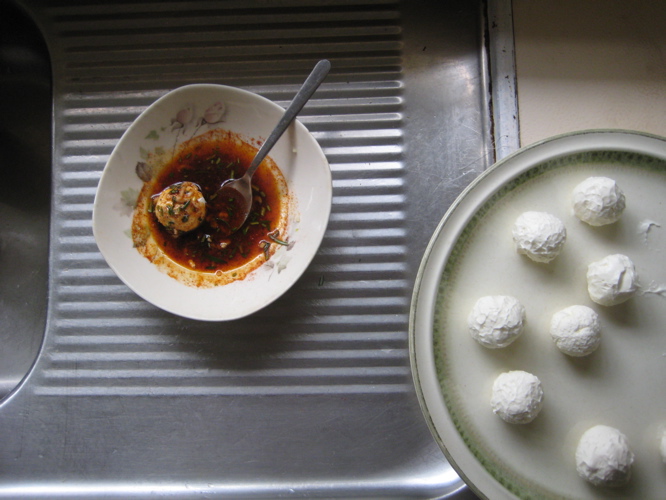
To start with, I took some labna, which you can make by following the recipe in my last post, and rolled it into balls.
I mixed together some paprika, rosemary, salt and garlic.

I added olive oil and dipped each ball.
I washed the kale, removed the stalks and chopped it roughly.
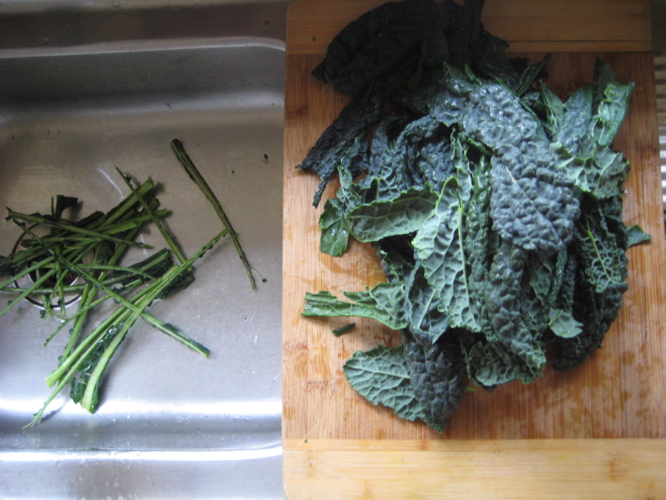
I placed the kale in a fry pan with more garlic, some butter and a little olive oil and cooked it until just wilted.
Then I popped it on some crusty toasted bread along with the labna.

And I ate it all up.

It was delicious.
Labna and Whey
May 27, 2011 § 3 Comments
Traditionally eaten in Lebanon, Palestine, Syria and Jordan labna is a wonderful and easy way to make your own soft white cheese. Labna is creamy and delicious and works equally well with savory or sweet things. For example, spread it on toast with honey or alternatively garlic, olive oil and tomato. Eat it with stewed fruit or next to curries and so on.
To make Labna, you need to separate the whey from yoghurt. You are then left with a beautiful soft cheese and whey.
Whey is incredibly nutritious. Sally Fallon notes in her book, Nourishing Traditions, that whey has been used to cure a variety of human ailments since the time of the ancient Greeks. It is full of minerals and one teaspoon taken in a glass of water is said to help digestion. It is also said to help keep your joints, muscles and ligaments young and movable.
So to separate your whey from your yoghurt, you will need to place your yoghurt in a muslin cloth.

And suspend over a bowl either in a sieve or hanging from a wooden spoon and leave in a cool place for 24 hours.
 You should then be left with a good layer of whey in the bottom of your bowl and lovely soft white cheese. Store your whey in a glass jar in the fridge.

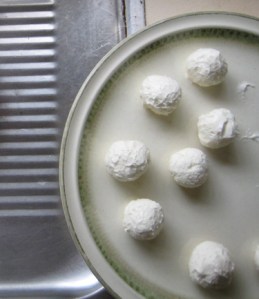
To store your labna you can roll it into balls and cover with olive oil (obviously not if you want to use it for something sweet).
When life hands you lemons: olive oil, lemon and cardamom muffins
May 14, 2011 § 4 Comments
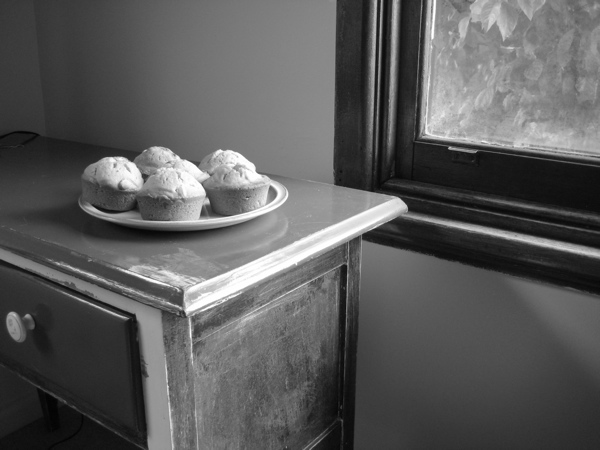
A lemon tree grows outside my bedroom window bushy and tall, almost the height of the house. From my bed I can watch them ripen on the branches too high to reach. And when I can’t contain myself any longer, I head out with a ladder and pull them down. The skin is rich with its lemony oils that fill the house when they are brought inside.


How to make Olive Oil Lemon Cardamom Muffins
1 1/2 cups castor sugar
1 1/4 cups olive oil
3/4 cup milk
2 eggs
3 cups plain flour
1 dessert spoon of baking powder
Zest of 2 lemons
1 1/2 tsp freshly ground cardamom
1 tsp vanilla essence

Pre-heat oven to 170°C. Stir all ingredients in a large mixing bowl until just combined. Cook for 1/2 an hour or until cooked through when tested with a skewer.

chilli orange chocolate cake
April 20, 2011 § 3 Comments

I should be studying. I am trying to write an essay. But every time I attempt it, I find myself wanting to throw my computer across the room. In an effort to relax, I have been dreaming up cakes and pottering in the kitchen.
So here is the result, a cake with bite. Inspired by a traditional brownie, it comes out crusty on top and soft, dense and moist in the middle, the chilli and orange a reflection of my mood. I have only used a subtle amount of chilli but if you want more kick you can add up to 1 tsp.
Ingredients
100 g butter
250 g brown sugar
200 g good quality dark cooking chocolate
2 free range organic eggs
1 tsp vanilla essence
rind of 1 orange
1/2 tsp chilli powder
1/4 tsp cinnamon
100 g plain spelt flour (or normal flour if you would prefer)
1/2 tsp baking powder
Pre-heat the oven to 180 degrees C. Melt the butter and chocolate in a bowl over boiling water. Remove from heat and stir in the sugar, eggs, vanilla, orange, chilli and cinnamon. Sift the flour and baking powder and add to the chocolate mix, stirring until just combined. Transfer to a lined and greased 20 cm diameter cake tin. Bake for 20 -30 minutes or until crusty on top but still moist inside.

watermelon salad
April 16, 2011 § 5 Comments
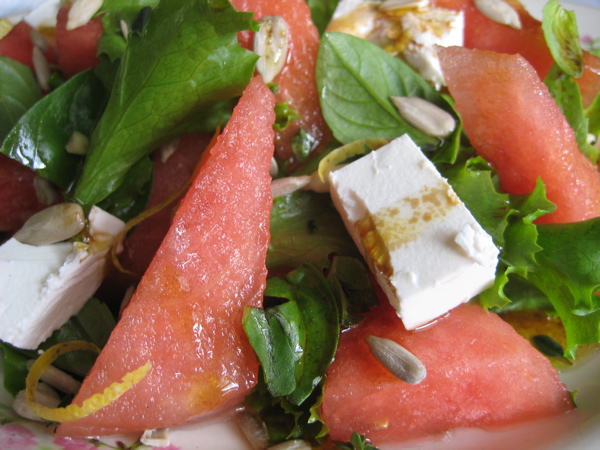
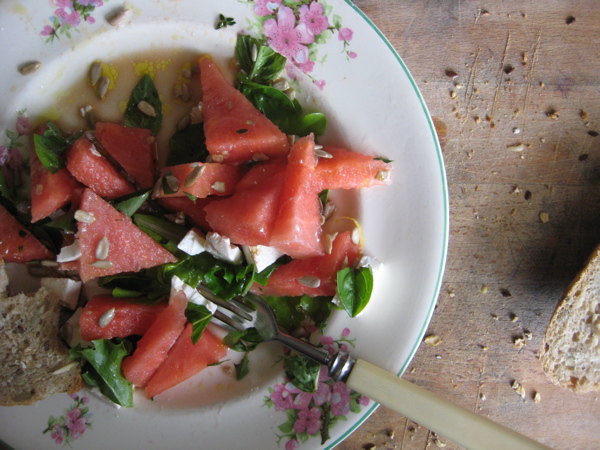
It’s a bit sneaky of me to squeeze this very summery recipe in mid April amidst the figs and soups, but I had an end of season watermelon and there is still plenty of basil in the garden so I thought I could just get away with it before it becomes really wintery and inappropriate. It did go down quite well with a crusty slice of bread and the afternoon Autumn sun shining in on the kitchen table. Its beautifully fresh and light.

what you will need
About 1 kg of watermelon cubed
3 – 4 handfuls baby greens
100 g fetta
Handful basil leaves roughly broken
2 Tbsp sunflower seeds
1 tsp lemon rind
2 Tbsp olive oil
1/2 Tbsp balsamic vinegar
Combine all ingredients in a large bowl and serve with crusty bread.
homemade fig and pear semi-freddo
April 3, 2011 § 13 Comments

Over our back fence there is an overgrown lane-way. The grass is knee-high littered with old televisions and garden clippings sneakily dropped out of neighbours lives. This place seems long forgotten. Certainly no one seems to go there. And I wouldn’t either, if it were not for the huge fig tree that hangs beyond one lucky neighbours back-yard, the branches reaching deep into the lane. Once a week I have been jumping our fence, braving the long grass with the hidden electrical appliances and checking on the figs, waiting for them to turn soft and blushing purple. I’m glad I have been watching so closely, because all of a sudden they have hurriedly begun to ripen and split, the purple blush revealing delicious pink softly wrapped in white. My recent visits have had me returning with a wide sticky smile and pockets juicy and bulging. I have needed careful restraint in order for them to make it all the way to the kitchen with me. Luckily the idea of fig ice-cream has kept me determined to save a special few.
Semi-freddo is a lovely way to get the idea of ice-cream without all the bother, fluster and equipment needed to produce it. Inspired by Jamie Oliver’s recipe in this book I have changed the quantities a bit, and adapted it to my own flavourings.
It’s probably obvious, I am making fig and pear semi-freddo because I want to impress someone. What could be especially delightful for my sweetheart just back from 5 months in Africa. This recipe is both seductive and gentle with the comfort of pears and flirtation of figs.
What you will need
400 g fresh figs
1 ripe pear
2 Tbsp fresh lemon or lime juice
pinch cinnamon
100 g brown sugar
1 vanilla pod
1 tsp pure vanilla extract
5 free range organic eggs separated
600 ml thick organic cream
pinch salt
1 Tbsp raw organic honey
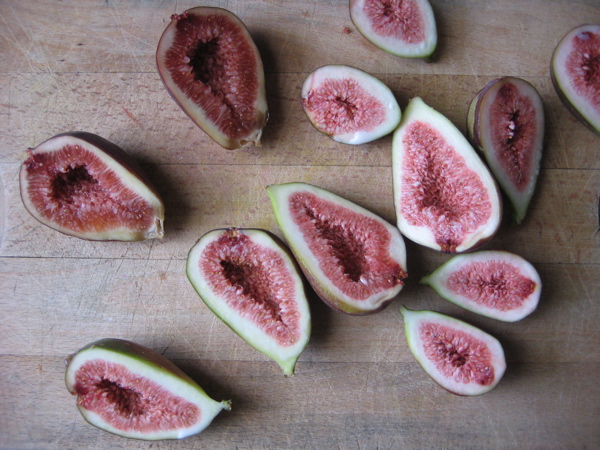
Remove the stalk from the fig and cut into quarters. Remove the core from the pear and roughly chop. Place the fig, pear, lemon juice, cinnamon and sugar in a saucepan and stew until soft and caramelised. Allow to cool before pureeing.
Whisk together the egg yolks and vanilla.
In a second bowl whisk the cream until soft peaks form.
In a third bowl whisk the egg whites and salt until very firm peaks form.
Gently fold all ingredients together. Transfer to an old ice cream container or tupperware and drizzle with honey before placing in the freezer for about 4 hours or until partially frozen. Otherwise, freeze for longer and place in the fridge for 20 minutes before serving. Semi-freddo is Italian and literally translates to semi-frozen.
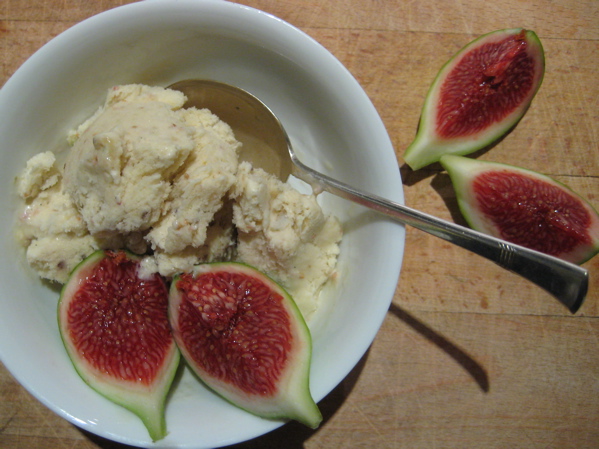
Serve in a bowl with fresh figs or a drizzle of honey.
Enjoy!
Other very tasty combinations:
Banana and cardamom
Apricot and almond
Chocolate and chili
zucchini and bacon soup
March 23, 2011 § 5 Comments

Bacon is a treat for me. I rarely purchase it because I worry about how happy those little pigs might have been in their lives. But as much as the well-behaved wholesome environmentalist in me protests, I secretly love bacon. I have tried not to, but the pleasure has remained, pure bacon enjoyment when it is on my plate. So in order to overcome my internal battles, I have justified eating it every now and again, provided its happy bacon. The bacon I have used in this recipe is biodynamic and free range, which if you are in Melbourne, you can find at Belmore Biodynamic Meats in Thornbury.
Now I also happen to think that a very good place for bacon, possibly even the best, is in soup. In saying that, I have to admit I have a bit of a soup obsession. It is probably my most favourite food in the whole wide world. If I had to choose just one thing to eat for the rest of my life, it would be soup, no questions asked.
This soup came about because as usual for this time of year there are whale like zucchini’s everywhere. I think the zucchini is balanced nicely with the richness of the bacon and the freshness of the lemon and thyme. You may have begun to notice my love affair with lemon and thyme… if not, Im sure you soon will, they seem to make their way into a lot of my cooking these days.


Recipe for zucchini and bacon soup
Good splash olive oil
1 large onion diced
4 – 5 cloves garlic crushed
1 tsp paprika
zest of 1/2 a lemon
3 – 4 medium-sized potatoes (I used toolangi delights, purple and beautiful)
About 1.2 kg zucchini
1 good tsp good quality vegetable stock
couple of sprigs thyme plus more for garnish
4 free range organic bacon rashers
Juice of half a lemon


In a large saucepan saute the onions and garlic until soft. Add the paprika and lemon zest and stir until fragrant. Add the potatoes, zucchini, stock, salt and pepper. Add enough water to just cover the vegetables. Simmer until the vegetables are nice and soft. Add the thyme, simmer for a tiny bit longer and then blend with a potato masher. If you have a blender feel free to use that, I don’t have one so i work by hand but I also like the no machine approach of the potato masher because I’m a bit quaint like that.
Slice up the bacon and fry in a pan until browned. Add to the soup along with the fresh lemon juice.
Serve in nice deep bowls and top with a bit more lemon rind and fresh thyme.

Delicious!
Serves 4 big bowls with a bit left over for lunch the next day. Because soup is always better the next day!
Autumn and Chutney Red and Green
March 18, 2011 § 2 Comments
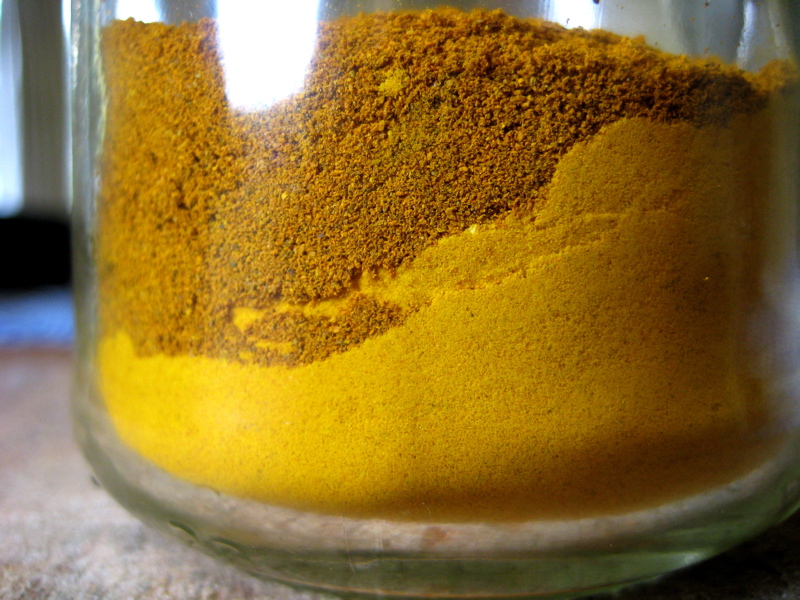
The days are whirling on by. Why is there such a fine balance between being too busy and not busy enough. I have hit too busy hard and have resorted to that all to familiar feeling that any tiny spare moment in the day must be made productive. At the same time I am trying preciously to hold onto stolen moments alone in the garden, or a walk down a quite evening street, or a good stare at the ceiling whilst lying in bed. A life without time to smell winter on its way, or missing the precise day autumn turns the leaves on the trees, or not noticing the loveliness of a miserable cold day, isn’t worth living to me.
So Autumn has snuck up and run me over. It comes with cold toes and dewy grass, turmeric days, darkening evenings, soup cravings and way too many tomatoes in the garden.
This Tomato Chutney recipe originated from a friends brother. Its evolved a bit along the way but was so damn good to start with that it would be a shame to change it too much. The recipe calls for green tomatoes but because ours are still ripening I have used red ones instead and just used a bit less salt. If you are using red ones you also don’t need to let the tomatoes sit over night in the salt as the recipe suggests.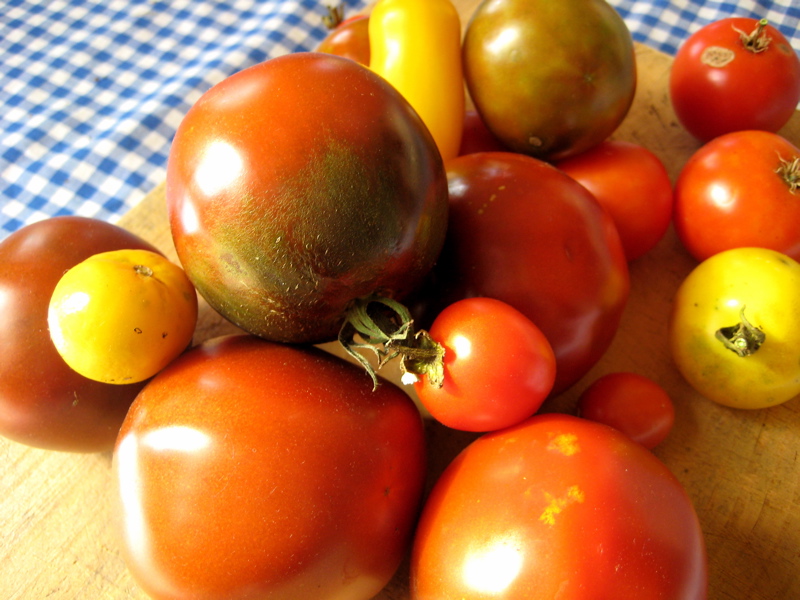
2 kg tomatoes roughly chopped
700 g onion finely diced
700 g grated apple
1/3 of a cup salt (if using red tomatoes 1/4 cup will do)
2 cups dark brown sugar
400 g sultanas or raisins
400 g dates roughly chopped
2 and 1/2 cups apple cider vinegar
1 Tbsp turmeric
1/2 Tbsp curry powder
1 Tbsp whole cummin seeds
1 Tbsp whole coriander seeds
Pinch cayenne pepper
1 tsp mustard seeds
/2 Tbsp grated fresh ginger
1/4 tsp chilli powder
1 Tbsp whole cloves
1 Tbsp whole pepper corns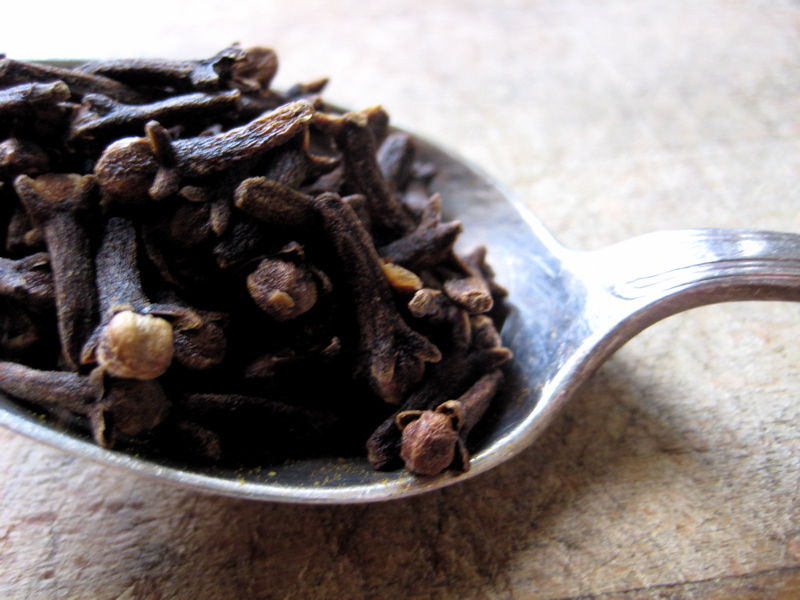
Put the tomatoes, onion and salt together in a bowl and leave to rest overnight (this is only necessary if you are using green tomatoes).
Place all ingredients in a large saucepan and bring to the boil for a couple of minutes. Simmer and stir regularly for 45 minutes.
In the meantime pre heat the oven to 140°C. Clean about 10 jars in hot water. Place the jars on their sides in the oven until they have dried. Boil the lids in a saucepan of hot water.
Pour the mixture, it must be still boiling hot, into the hot jars and tighten the lids immediately.

 the invisible cookbook