
spelt hot cross buns
March 30, 2013 § Leave a comment

I remember making hot cross buns with my mum and sister when I was very young. I remember the smell of orange and spice bouncing off the kitchen walls and making it bright and warm.Often the fire would be on because the weather had started to turn by then and my sister and I would stand on chairs at the kitchen bench rolling out the little white stripes of dough to become the crosses, placing them haphazardly on top of the buns before they went in the oven. We would prove the dough on the backseat of the car which mum would have parked in the sun. Covered with a damp tea towel and sitting wonkily on the seat, this would always amuse me.
I have always loved hot cross buns, who wouldn’t – the smell of yeast and spice, warm and gently sweet, melting with butter. What a shame people only tend to eat them one day of the year.
Here I have a recipe that is not my mothers, in-fact there is no sentimental story behind it whatsoever. I found it today, not even in a well-loved, old and creased cook book, but on the internet. And it is good. So much so that I wanted to share it with you all. Perhaps if your quick you may be able to whip up a batch for tomorrow.
Below is my version of the recipe I found. It is quite similar to the original except I used spelt flour instead of wheat, orange zest instead of dried orange peel, honey instead of sugar and I added a pinch of clove.
Recipe for Spelt Hot Cross Buns
2 tsp dried instant yeast
3 ½ cups plain spelt flour
1 Tbsp honey
300 ml milk
1 tsp salt
1 tsp cinnamon
½ tsp ground all spice
¼ tsp freshly grated nutmeg
Pinch of ground clove
60 g butter
1 large egg lightly beaten
1 ¼ cups sultanas, currants, or raisins
Zest of one orange
Crosses
2 Tbsp flour
2 Tbsp cold water
Glaze (optional – it ends up making the bun sweeter if that is what you like)
2 Tbsp sugar
¼ tsp cinnamon
150 ml boiling water
Sift the flour into a small bowl and add the water. Mix thoroughly to form a thick paste. Spoon into a pre-used and cleaned zip-lock bag. Cut a little hole out of the corner of the bag and use it to pipe the mixture in crosses on top of the buns (not the way we did it when I was young, but I have to say, so much easier).
Bake in a preheated oven at 220°C/390°F for 15–20mins.
Whilst the buns are in the oven prepare the glaze by mixing all ingredients and dissolving the sugar in the boiling water. Brush this mixture over the buns as soon as they come out of the oven and whilst they are still hot.
spiced roast eggplant and zucchini salad
January 13, 2013 § 1 Comment
It is hot! Stinking hot! The kind of heat with thick hairdryer winds. The kind of heat you feel like you are swimming in rather than walking in. The air is viscous, your arms almost float in it.
I never feel like eating much in this weather other than ice cubes, salads and smoothies. Not all at once of course but spaced between episodes of gasping on the couch with a wet towel on my head and the fan on high no less than two feet from my face.

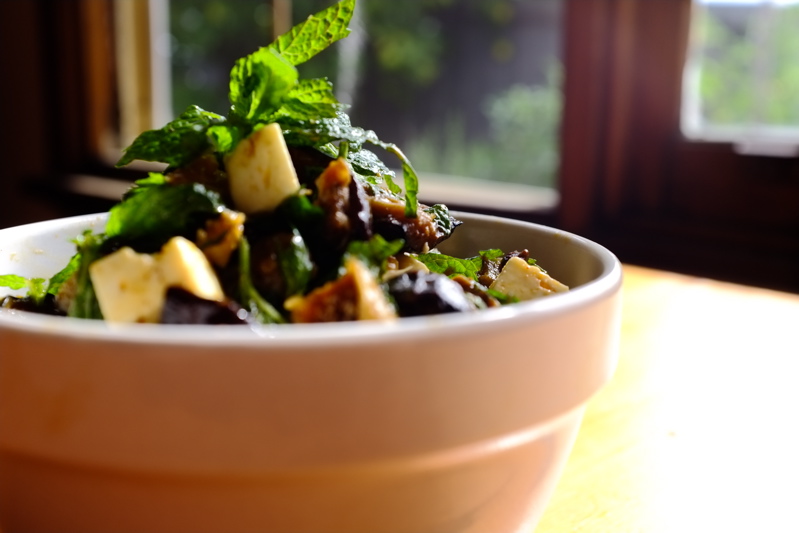
The recipe below for an eggplant and zucchini salad spiced with paprika, cumin and mint, is both light and rich. The dried figs, walnuts and fetta add a lovely texture to the softness of the roasted vegies.
Spiced roast eggplant and zucchini salad
2 – 3 large eggplants
1 large or 2 small zucchinis
Salt
1/3 cup olive oil
2 Tbsp apple cider vinegar
1 Tbsp honey
1 tsp paprika
1/2 tsp cumin
4 cloves garlic chopped
Zest and juice of 1 lemon
Juice of half an orange
1/2 Tbs tamari or soy sauce
1 cup fresh mint leaves roughly chopped
1/2 cup dried figs roughly chopped
3/4 cup toasted walnuts roughly chopped
1 cup roughly chopped crumbled fetta
Preparation
Preheat oven to 200°C /400°F
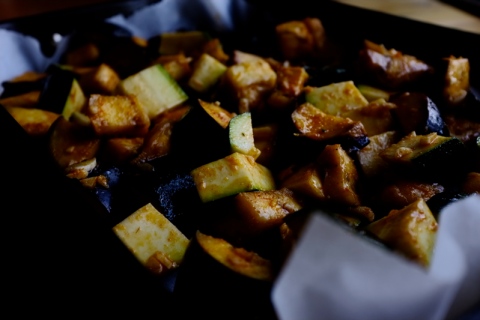
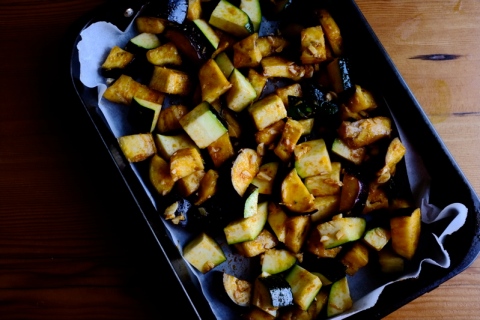
Cut the eggplant and zucchini into 1-inch cubes and put in a large bowl. Sprinkle lightly with salt and set aside for about 15 minutes or until juices start to come out of the eggplant. Rinse in cold water, drain and pat dry.
In the meantime, combine olive oil, vinegar, honey, paprika, cumin, lemon zest, half the lemon juice and chopped garlic. Stir into the salted and washed eggplant and zucchini.
Spread the mixture onto a large baking paper lined baking dish and roast in the preheated oven for 45 minutes, or until very tender and browned. You will need to check on them and give them a toss halfway through the cooking. Remove from the oven and allow to cool slightly.
Place roasted veggies in bowl and add tamari, orange juice and the last half of the lemon juice. Toss. Stir in the mint, figs, walnuts and feta and enjoy.
Serves 4

hello 2013
January 4, 2013 § 2 Comments

I was camping at the Grampians for new years, watching birds and stars, climbing mountains and drinking lots and lots of tea. It was such a peaceful way to start 2013, and I feel like this year is going to be great! It is just a feeling, which is perhaps more important than any materialisation of the thought, but that’s ok too.
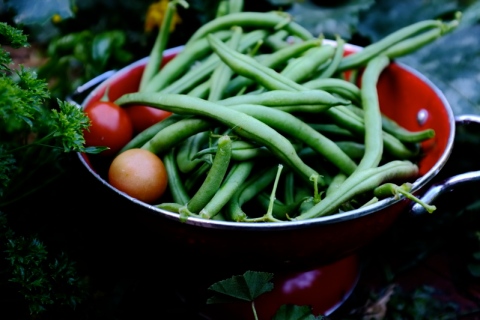
This festive time of year always makes me think of my mum and her bean salad. It often ends up on the table on special occasions and Christmas and new years are no exception.
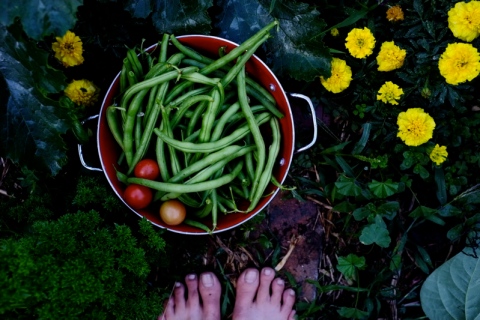
As easy and very simple dishes often are, this has always been one of my favourites. This year however, I have started making it with some fresh apricots chopped up and thrown in too. There is something lovely about the tartness of the vinegar with the sweet freshness of the apricots and the greenness of the beans and basil. Below, I have put mum’s recipe but feel free to add some apricots if you would like.
Mum’s Green Bean Salad
2 huge handfuls of green beans
A splash of olive oil
A few splashes of balsamic vinegar
A good sprinkle of sea salt
A very good handful of roughly chopped basil
Top and tail beans, cut in half and steam until fluorescent green and crispy. Take off the heat and rinse in cold water to stop the cooking. Whilst the beans are still warm add the olive oil, vinegar and salt and mix in. Once the beans are cool add the basil.
This salad can be served straight away or left to marinate for a couple of hours and served at room temperature.
the way I like it
December 12, 2012 § 5 Comments

I have always taken on a rather flippant character in the kitchen and I have always been very hopeless at following recipes. It’s a bit like an uncontrollable desire to not do as I am told. But I think this also comes from being an impatient kind of person – I can never be bothered to measure things properly, I can’t stand all those different sized measuring spoons, and never seem to be able to find the measuring cup in our chaotic and unruly cupboards. I’m also impatient enough to forget that it is this very nature that is the reason for unruly cupboards in the first place. Things get thrown on shelves with doors slammed and a quick prayer that nothing will come tumbling out when displaced by the new object that has descended upon its turf.
I admire those people, who don’t seem to notice the things that slow them down, those that can measure flour down to the milligram, who level a cup with the scrape of a knife, who follow a recipe methodically.
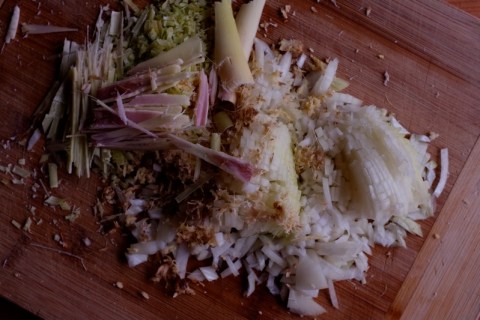
The recipe below for beef rendang is one I first ate at my friend and colleague Noel’s house. Noel and his wife Jenny are amazing cooks. The recipe came out of an old and battered book, with pages yellowing and crinkled at the sides. They picked it up when they were in Indonesia, perhaps more than 30 years ago, and they have been cooking out of it ever since. It is very much my kind of recipe – humorously vague with a few Indonesian words for ingredients thrown in here and there. It leaves much to the imagination. But it is also an absolutely beautiful recipe. The meat becomes lovely and tender with hours spent cooking and the flavours are rich and creamy.
Below I have written the recipe directly from the book, but with some added notes in honour of people who like things more precise, and in an attempt to be more like that myself. I hope you enjoy.
Rendang Padang
1 lb steak (I used 600g)
2 – 4 tsp chilli
1 scant tsp laos (galangal powder – I used fresh)
1 medium onion grated
1 small clove garlic crushed (I used 2)
1 bay leaf
1 tsp salt
3 cups thick santan (coconut cream)
1 knob ginger (I used about 1 inch)
½ tsp turmeric
1- 2 stalk/piece lemon grass pounded (and chopped)
Asam (juice of half a lemon)
(I also added 2 small potatoes and a small sweet potato)
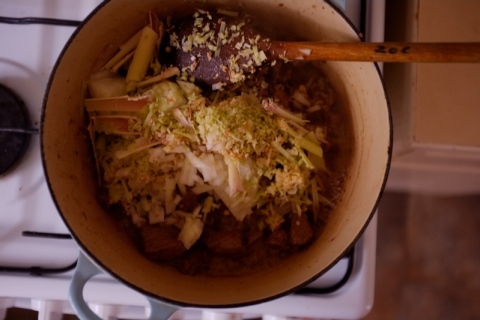
Cut the meat into serving size pieces and place in a wide saucepan (with hot oil – brown the meat).
Crush Ginger and add, with onion and garlic and other spices (stir until fragrant).
Add Santan (coconut cream).
(Add potatoes and sweet potato)
Bring quickly to the boil, stirring frequently to prevent catching until the oil comes out.
Continue the slow cooking until the oil is re-absorbed. This can take 2-3 hours told, even up to 8 hours (I cooked for about 2 hours, being impatient offcourse).
The dish should be completely dry when served (I think they mean thick here).
(Serve with rice)
Note: New potatoes, red beans (previously soaked over night), or pieces of young jackfruit, can be added to this dish when the santan has come to the boil.
Instead of beef – can use chicken, prawn, duck, liver, egg, goat, or kangaroo meat.
there’s time
October 24, 2012 § 7 Comments

Hello…
Well, I made it. I am on the other side of something quite big, something that has kept me rather distracted from myself and all the other things I have wanted to do for the past two years. I have finished my masters! And there is a very peaceful knowledge that time is now on my side. It belongs to me again. This is nice. Well very nice actually. Overwhelmingly fantastic!

So here I am with some space, to do something for myself, slowly and how ever I want to. Thats a lovely feeling.


The garden is caught between winter and summer and remains positively neglected and wild. But, this is not so bad, because I know that it doesn’t have to be that way.


Its wonderful to know I can now spend more time taming broad beans, if thats what I want to do. But perhaps more importantly, more time nourishing my wicked taste for very fine delicious things.
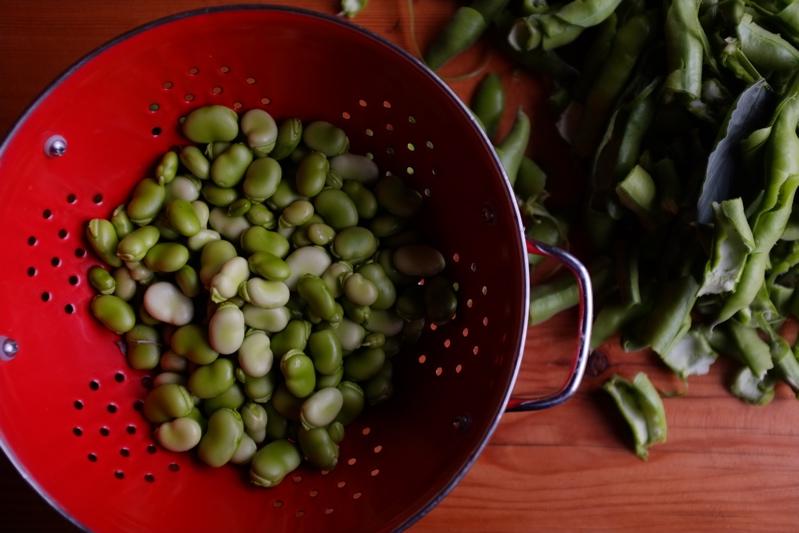
Thanks to a very delicious breakfast eaten here and to Jamie Oliver for the idea for this recipe.
Smashed Broad Beans and Peas
2 cups fresh podded broad beans
1 cup fresh podded peas
a decent handful of fresh mint
a decent couple of splashes of olive oil
juice of one lemon
about 1/4 of a garlic clove crushed
Salt and pepper to taste

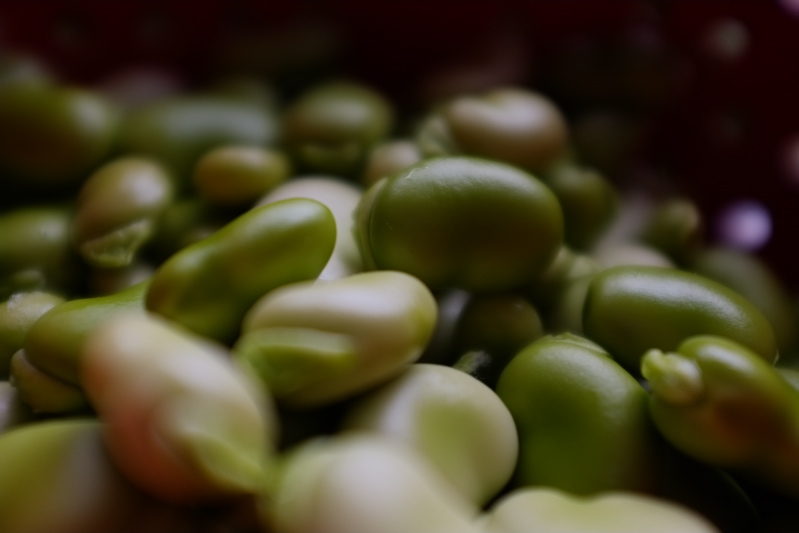
Cook the peas and beans in boiling water for no more than two minutes, drain and rinse in cold water immediately. Pull the outer skin of each podded broad bean – and puree all ingredients together.

Its that easy
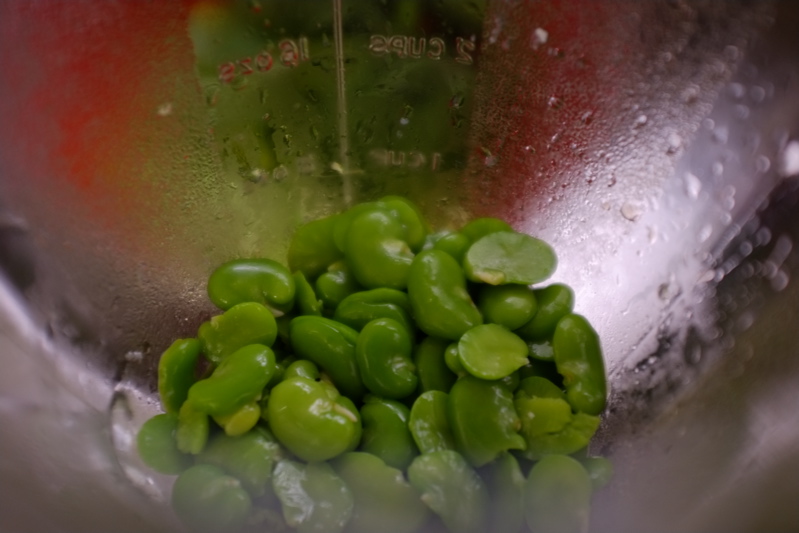
Serve on toast with a poached egg and a smattering of finely grated pecorino.
kimchi
September 30, 2012 § 2 Comments
Here is a vegetarian version of kimchi, a korean type of sauerkraut. I have had a craving for this for a while now, so yesterday I headed on down to the CERES market to pick up the ingredients .

What you will need
6 cups shredded cabbage
2 cups grated carrot
2 cups grated daikon radish
1 Tbsp grated ginger
2 cloves crushed garlic
1/2 – 1 tsp chilli flakes or chilli paste
1 Tbsp Salt
4 Tbsp Tbsp whey (or alternatively use an extra 1 Tbsp salt)

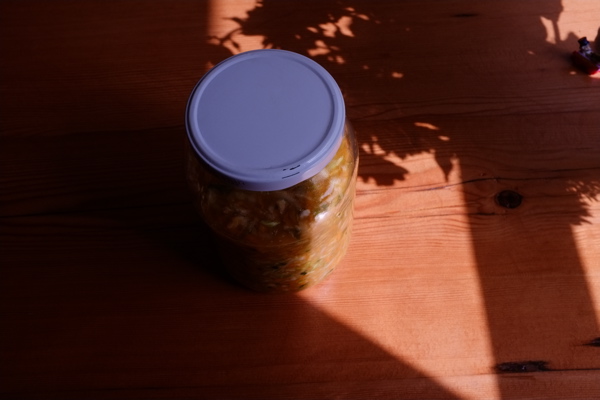
Place all ingredients in a very large ceramic or glass bowl. Pound with a heavy spoon, potato masher, or a meat hammer to release the juices. Sterilise, a wide mouthed 2 liter jar. Place the pounded ingredients inside the jar and push down firmly so there is a layer of juices above the vegetables. There should be at least 1 inch between the top of the jar and the vegetables. Cover tightly and leave at room temperature for 3 days before transferring to the fridge. You can eat straight away, however it will improve after another week or so.
I have always loved cardamom biscuits the most
April 15, 2012 § 4 Comments

I don’t think I have ever made these biscuits the same way twice. They seem to evolve from feeling and what is in the cupboard at the time. Here is a version that is close to what I always start out wanting to make but am usually too stingy or don’t have all the ingredients at hand to pull it off. You can choose to add less almond meal and more flour if you like – the nuttiness makes them very rich.
Recipe for cardamom biscuits
100g butter
3/4 cup rapadura or brown sugar if you want
½ tsp baking powder
1 tsp cardamom
1 tsp vanilla essence
½ tsp cinnamon
¼ tsp nutmeg
zest of ½ orange
1 egg lightly beaten
1 cup almond meal
¾ cup wholemeal spelt flour sifted
Pre heat oven to 180°C. Cream together butter, rapadura and spices. Add and combine the egg and vanilla. Then stir in the flour, almond meal and baking powder until just combined. You don’t want to over stir once the flour has been added because it will stimulate the gluten and make your biscuits tough
Place spoonfuls on a greased baking tray making sure you allow room for them to spread. Cook for 15-20 minutes or until golden brown.

wild sourdough bread
November 3, 2011 § 3 Comments

I had a sourdough starter given to me from a friend who had been given it from someone else who had inherited it from his mother. The original was rumored to be 30 years old or so the story goes, and no wonder it made such lovely bread. It wasn’t my first, I had inherited others and made some myself but I was never devoted enough to go the distance as travels would take me here and there and houses were often new. Needless to say, a lot of them got lost or perished along the way. But during their various lives spent with me, they all became well-loved members of the family.
Even though my descendent of the 30 year old starter had not been in my life more than four months it was no exception, it had worn a comfortable place in my heart. But one day it mysteriously disappeared, the little jar where it sat dormant in the fridge was gone without a trace. My reaction was one of somewhat panic. The mysteriousness made it all the more tormenting. I felt I had lost a wise old friend.
After some lonely days left yearning for some dough to stir and knead and bake and smell, I pulled myself together to start again, from scratch, to see what kind of a beast this spring Melbourne air would bring to a culture. Also, I have been wanting to post a recipe on sourdough for sometime now but never knew quite where to start… I guess at the very beginning is best.
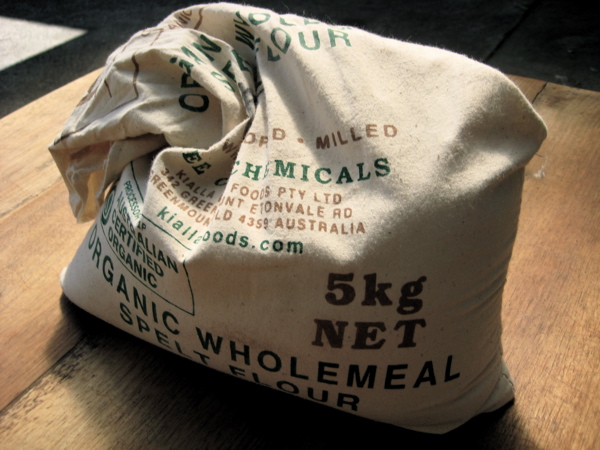
Sourdough is pretty much a way of making bread without conventional yeast, instead you use natural yeasts harnessed from the air. And thats what is so very wonderful about it, every culture is unique taking the native variety that comes with the location.
How to make sourdough bread
The starter

Place 1 cup flour (I like using spelt or rye, but any wholemeal flour will do) and 1 cup water in a large wide-mouthed jar, stir well and let it sit, covered with a muslin cloth, for about 4-6 days or until it starts to bubble. During this time you must stir it at least once a day, twice is better – once in the morning and once in the evening. When it bubbles and starts to rise in the jar you should notice it has a nice sour smell. You can now add 1 tablespoon of flour every day for 3 or 4 days and continue stirring as before. It should get more bubbly and be doubling in size between feeds. Now you know it is ready and you can either feed it one last time and store in the fridge with a muslin cloth covering the jar or begin making your bread.
When storing the starter in the fridge it is best to feed it about 2 – 3 Tbsp of flour and a dash of water twice a week, it should remain the consistency of a thick paste or very wet dough. It will last in the fridge for about 3 weeks without being fed but might need a bit of extra feeding and stirring to get it happily bubbly again. You will get a feel for it as you go along.

The bread
The foundation for this recipe comes from another old friend Jenny, who gave me my very first sourdough culture about 5 years ago.
First you will need to empty the sourdough starter into a large bowl. Here its best to use a porcelain non reactive bowl. Stir in 1 cup water and 1 cup flour (again I like to use spelt or rye, but you can use any flour, or any combination of flours). Return half the mixture back into your jar, cover with your muslin cloth and return to the fridge for next time. Let what is left in the bowl sit for 6 – 12 hours. I usually cover it with a plate to prevent anything falling in.
When it is active and bubbly again, add another cup flour and water, mixing well. Allow to rest for another 6 – 12 hours (the colder the weather the longer it will need). Once active for a final time, its ready to make your bread!! (note if you used a starter that had been left in the fridge unfed for more than a week it might need one more feed at this stage to get it really bubbly and happy again). You should now have roughly 2 cups of mixture.
The final stage
To your mixture add, 1 cup water, ~ 3 – 3 1/2 cups flour and 1 tsp salt. Stir until combined. Then knead for 10 minutes adding more flour as needed.
Richard Bertinet has a wonderful technique for kneading, really just the French way, but he is where I discovered it. I found a rather unglamorous you-tube demonstration here. You will need a slightly wetter dough than my recipe, so add less flour. Also, I have never had success with this kneading method when I have used rye. A combination of spelt and wheat or all wheat seems to work best. I think high gluten is important here. You will end up with a more chewy result with this technique but its a bit more tricky so it might be best to master the basic sourdough before moving into complicating ways of kneading.
Once kneaded into a smooth dough, place into a greased and lightly floured bread tin and allow to rise covered with a damp cloth or plastic bag, until it doubles in size. This is usually between 6 and 12 hours depending on the temperature. Hot weather will make it rise a lot faster. You also have to be careful you don’t let it over rise as you will notice it starts sinking again.
Finally, bake in a pre-heated oven at 200°C/390°F for about 45 minutes or until it sounds hollow when tapped.
For example
Fri AM – Feed and split
Fri PM – Feed
Sat AM – Knead and put in tin
Sat PM – Bake

For further reading on sourdough see Sally Fallon’s Nourishing Traditions and Sandor Ellix Katz Wild Fermentation
Rob’s chickpea pumpkin and date salad
October 14, 2011 § 8 Comments

As summer is on its way and the days get warmer, lighter fresh meals are entering the kitchen. Yet those vegies we typically associate with summer are not quite here. I love the winter flavours with a summer feel that this salad, served for dinner tonight by my friend Rob, embodies. Memories of winter somehow all the more pleasurable because they can be enjoyed from the warmth of spring.
Rob is not your typical looking cook, red-haired, you will often find him saw on grain woodworking some design at the back of the house in a cloud of fine dust that settles in his beard and hair, or gazing into space with one of his many instruments saddled in his lap. But Rob keeps surprising me with his kitchen skills and kindly agreed when I asked him to post his recipe… admitting he got it from somewhere else but long enough ago to have forgotten where and changed along the way. You can find his music here where he plays with the lovely Jess Ribeiro and the Bone Collectors. And here is his salad, Chickpea, Pumpkin and Date.
How to Make Chickpea Pumpkin and Date Salad
Roughly Chop about 1/2 a pumpkin and sprinkle it with 1 tsp ground cumin and 1 tsp ground coriander, drizzle with olive oil and bake in an oven at 180 degrees Celsius for about 1/2 to 3/4 of an hour.
In the meantime take 2 cups dried chickpeas and cook in boiling water until soft (if your feeling lazy, or you want to, you can just use 2 cans chickpeas)
Combine in a large bowl with the pumpkin, a cup of roughly chopped dried dates, a handful of chives finely chopped, 2 bunches coriander roughly chopped, juice and rind of one lemon and a good dashing of olive oil. Add salt and pepper to taste and voilà!
baked lemon cheesecake with an almond and hazelnut base
September 28, 2011 § 7 Comments
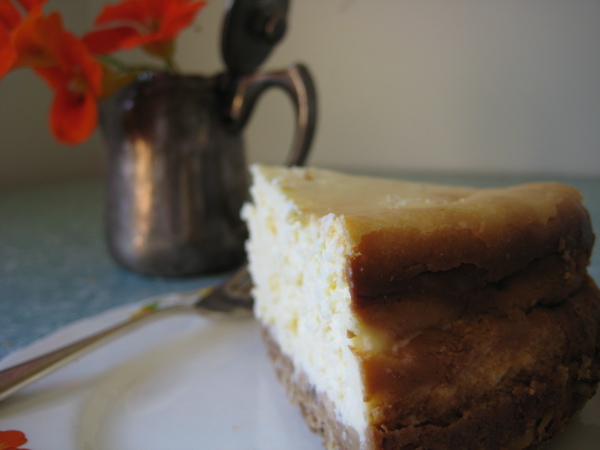
I think simple is best when it comes to cheesecake. Therefore, not much of an introduction needed, except to say I adapted it from here, avoided all the electrical equipment that makes me dread washing up, filled it with lemon rind and changed the base.
For the base
80 g plain biscuits (plain wafers and arnotts variations work well)
1 1/4 cups mix almonds and hazelnuts
150 g non salted butter
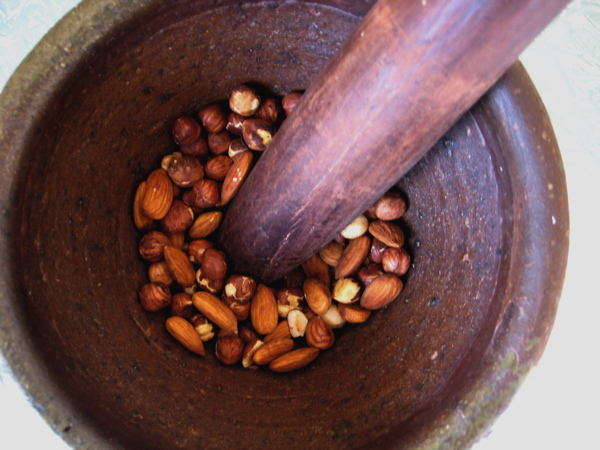
Toast the nuts and crush in a mortar and pestle along with the biscuits. Melt the butter and mix with the nuts and biscuits. Push into a lined and greased 22 cm base springform cake tin. Allow to chill in the fridge for half an hour and in the meantime…
… the filling
500 g cream cheese
300 g sour cream
3/4 cup castor sugar
4 smallish to medium eggs
3 tsp vanilla essence
Rind from 1 1/2 lemons

Note, pull the cream cheese and sour cream out of the fridge a couple of hours early to help it soften.
Preheat the oven to 160°C/320°F. Cream together the cream cheese, sour cream, and sugar. Add the eggs, vanilla essence and lemon rind and beat with a hand-mixer until smooth and creamy. Pour onto the base and bake for an hour or until set all the way through. Chill in the fridge et voilà.

Parfaite!! Well except for the little crack. But thats a sure way to tell its homemade.
I can’t help imagining what it might taste like with rosemary, or maybe lavender (not so simple after all)… does that make me strange?
 the invisible cookbook