
homemade fig and pear semi-freddo
April 3, 2011 § 13 Comments

Over our back fence there is an overgrown lane-way. The grass is knee-high littered with old televisions and garden clippings sneakily dropped out of neighbours lives. This place seems long forgotten. Certainly no one seems to go there. And I wouldn’t either, if it were not for the huge fig tree that hangs beyond one lucky neighbours back-yard, the branches reaching deep into the lane. Once a week I have been jumping our fence, braving the long grass with the hidden electrical appliances and checking on the figs, waiting for them to turn soft and blushing purple. I’m glad I have been watching so closely, because all of a sudden they have hurriedly begun to ripen and split, the purple blush revealing delicious pink softly wrapped in white. My recent visits have had me returning with a wide sticky smile and pockets juicy and bulging. I have needed careful restraint in order for them to make it all the way to the kitchen with me. Luckily the idea of fig ice-cream has kept me determined to save a special few.
Semi-freddo is a lovely way to get the idea of ice-cream without all the bother, fluster and equipment needed to produce it. Inspired by Jamie Oliver’s recipe in this book I have changed the quantities a bit, and adapted it to my own flavourings.
It’s probably obvious, I am making fig and pear semi-freddo because I want to impress someone. What could be especially delightful for my sweetheart just back from 5 months in Africa. This recipe is both seductive and gentle with the comfort of pears and flirtation of figs.
What you will need
400 g fresh figs
1 ripe pear
2 Tbsp fresh lemon or lime juice
pinch cinnamon
100 g brown sugar
1 vanilla pod
1 tsp pure vanilla extract
5 free range organic eggs separated
600 ml thick organic cream
pinch salt
1 Tbsp raw organic honey
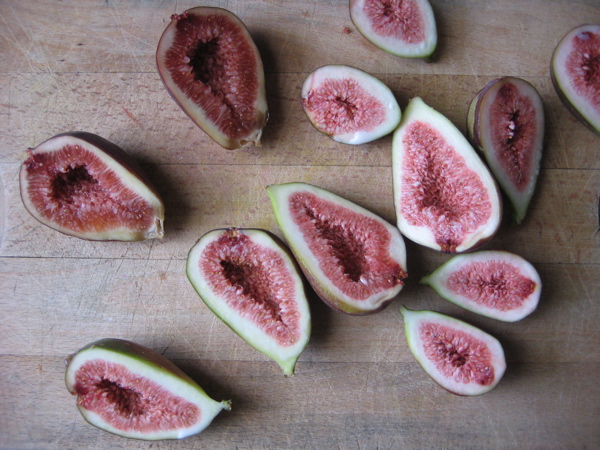
Remove the stalk from the fig and cut into quarters. Remove the core from the pear and roughly chop. Place the fig, pear, lemon juice, cinnamon and sugar in a saucepan and stew until soft and caramelised. Allow to cool before pureeing.
Whisk together the egg yolks and vanilla.
In a second bowl whisk the cream until soft peaks form.
In a third bowl whisk the egg whites and salt until very firm peaks form.
Gently fold all ingredients together. Transfer to an old ice cream container or tupperware and drizzle with honey before placing in the freezer for about 4 hours or until partially frozen. Otherwise, freeze for longer and place in the fridge for 20 minutes before serving. Semi-freddo is Italian and literally translates to semi-frozen.
Serve in a bowl with fresh figs or a drizzle of honey.
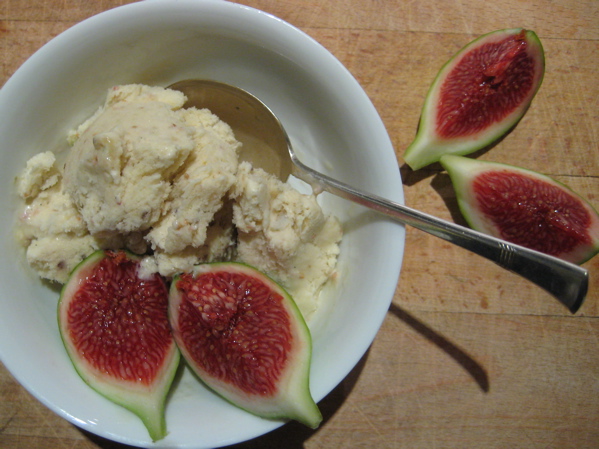
Enjoy!
Other very tasty combinations:
Banana and cardamom
Apricot and almond
Chocolate and chili
zucchini and bacon soup
March 23, 2011 § 5 Comments

Bacon is a treat for me. I rarely purchase it because I worry about how happy those little pigs might have been in their lives. But as much as the well-behaved wholesome environmentalist in me protests, I secretly love bacon. I have tried not to, but the pleasure has remained, pure bacon enjoyment when it is on my plate. So in order to overcome my internal battles, I have justified eating it every now and again, provided its happy bacon. The bacon I have used in this recipe is biodynamic and free range, which if you are in Melbourne, you can find at Belmore Biodynamic Meats in Thornbury.
Now I also happen to think that a very good place for bacon, possibly even the best, is in soup. In saying that, I have to admit I have a bit of a soup obsession. It is probably my most favourite food in the whole wide world. If I had to choose just one thing to eat for the rest of my life, it would be soup, no questions asked.
This soup came about because as usual for this time of year there are whale like zucchini’s everywhere. I think the zucchini is balanced nicely with the richness of the bacon and the freshness of the lemon and thyme. You may have begun to notice my love affair with lemon and thyme… if not, Im sure you soon will, they seem to make their way into a lot of my cooking these days.


Recipe for zucchini and bacon soup
Good splash olive oil
1 large onion diced
4 – 5 cloves garlic crushed
1 tsp paprika
zest of 1/2 a lemon
3 – 4 medium-sized potatoes (I used toolangi delights, purple and beautiful)
About 1.2 kg zucchini
1 good tsp good quality vegetable stock
couple of sprigs thyme plus more for garnish
4 free range organic bacon rashers
Juice of half a lemon


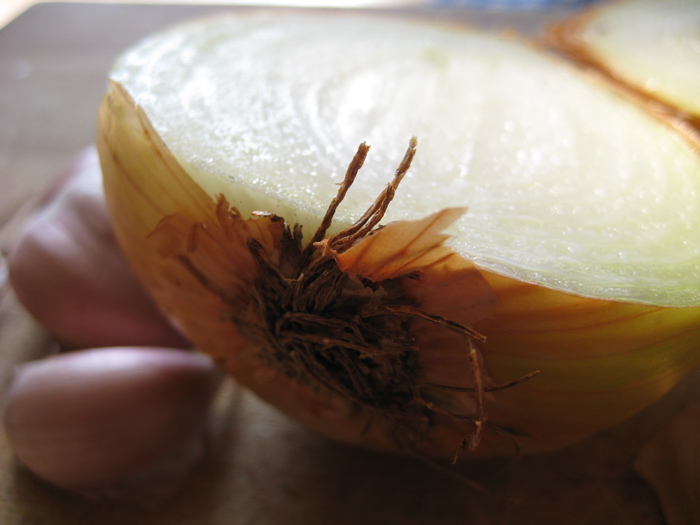
In a large saucepan saute the onions and garlic until soft. Add the paprika and lemon zest and stir until fragrant. Add the potatoes, zucchini, stock, salt and pepper. Add enough water to just cover the vegetables. Simmer until the vegetables are nice and soft. Add the thyme, simmer for a tiny bit longer and then blend with a potato masher. If you have a blender feel free to use that, I don’t have one so i work by hand but I also like the no machine approach of the potato masher because I’m a bit quaint like that.
Slice up the bacon and fry in a pan until browned. Add to the soup along with the fresh lemon juice.
Serve in nice deep bowls and top with a bit more lemon rind and fresh thyme.

Delicious!
Serves 4 big bowls with a bit left over for lunch the next day. Because soup is always better the next day!
Autumn and Chutney Red and Green
March 18, 2011 § 2 Comments
The days are whirling on by. Why is there such a fine balance between being too busy and not busy enough. I have hit too busy hard and have resorted to that all to familiar feeling that any tiny spare moment in the day must be made productive. At the same time I am trying preciously to hold onto stolen moments alone in the garden, or a walk down a quite evening street, or a good stare at the ceiling whilst lying in bed. A life without time to smell winter on its way, or missing the precise day autumn turns the leaves on the trees, or not noticing the loveliness of a miserable cold day, isn’t worth living to me.
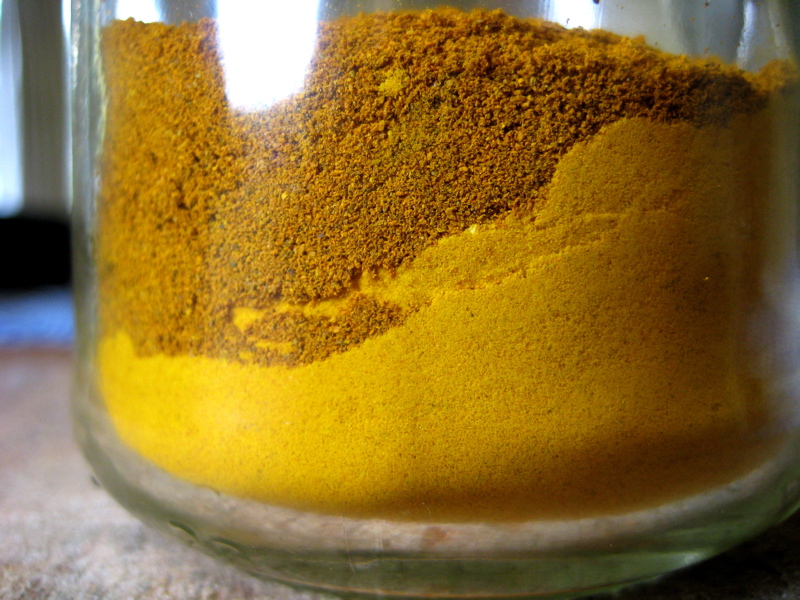
So Autumn has snuck up and run me over. It comes with cold toes and dewy grass, turmeric days, darkening evenings, soup cravings and way too many tomatoes in the garden.
This Tomato Chutney recipe originated from a friends brother. Its evolved a bit along the way but was so damn good to start with that it would be a shame to change it too much. The recipe calls for green tomatoes but because ours are still ripening I have used red ones instead and just used a bit less salt. If you are using red ones you also don’t need to let the tomatoes sit over night in the salt as the recipe suggests.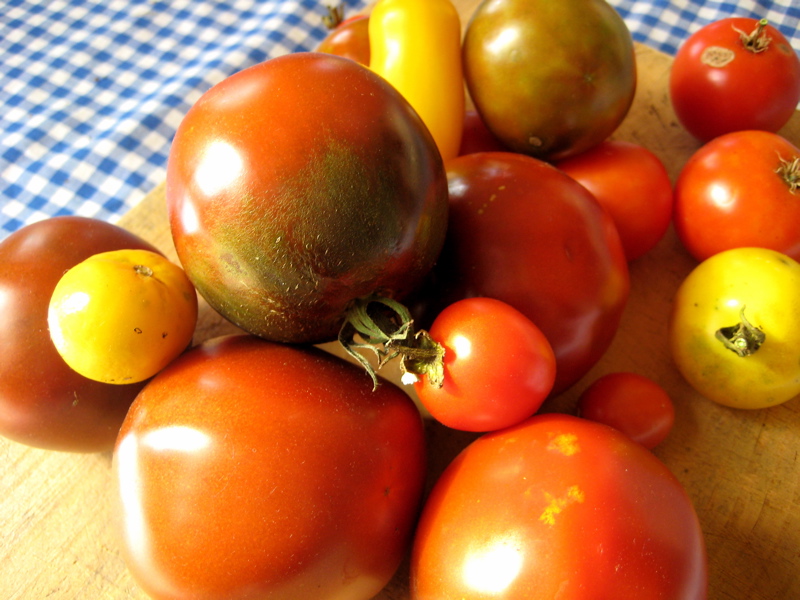
2 kg tomatoes roughly chopped
700 g onion finely diced
700 g grated apple
1/3 of a cup salt (if using red tomatoes 1/4 cup will do)
2 cups dark brown sugar
400 g sultanas or raisins
400 g dates roughly chopped
2 and 1/2 cups apple cider vinegar
1 Tbsp turmeric
1/2 Tbsp curry powder
1 Tbsp whole cummin seeds
1 Tbsp whole coriander seeds
Pinch cayenne pepper
1 tsp mustard seeds
/2 Tbsp grated fresh ginger
1/4 tsp chilli powder
1 Tbsp whole cloves
1 Tbsp whole pepper corns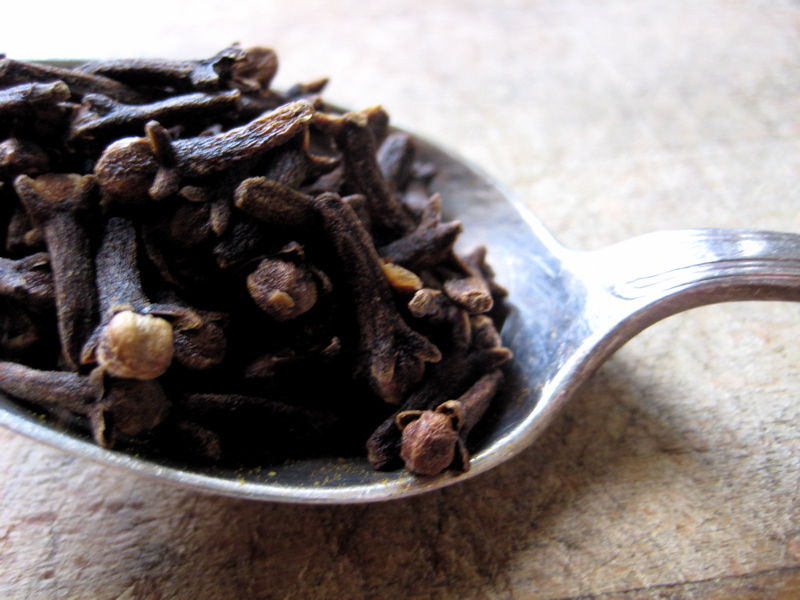
Put the tomatoes, onion and salt together in a bowl and leave to rest overnight (this is only necessary if you are using green tomatoes).
Place all ingredients in a large saucepan and bring to the boil for a couple of minutes. Simmer and stir regularly for 45 minutes.
In the meantime pre heat the oven to 140°C. Clean about 10 jars in hot water. Place the jars on their sides in the oven until they have dried. Boil the lids in a saucepan of hot water.
Pour the mixture, it must be still boiling hot, into the hot jars and tighten the lids immediately.

Urban Agriculture: A Beautiful Reality
March 8, 2011 § 3 Comments
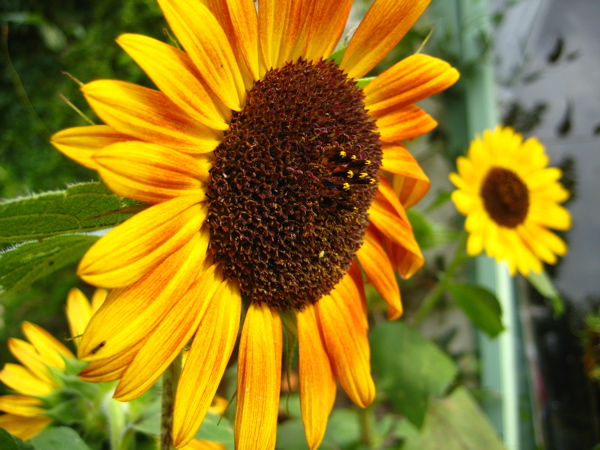
Imagine a city where streets are lined with citrus trees, strawberries abound in the centre of roundabouts, window boxes are laden with fresh herbs and roof tops are heavy with food-producing gardens. Continue imaging compact residential and business areas broken up with community gardens and small farms where all organic household waste gets recycled. An environment fostering a sense of place and belonging where people linger together in the green of their parks munching apples that they foraged from their urban surrounds. This is the dream of Urban Agriculture, an agricultural method that sustains and enhances as well as nourishes urban life.
Food growing in urban environments has a long history all over the world. In Australia for example, the first half of the 20th century saw the food industry very much producer driven and backyard ‘veggie’ gardens and fruit trees were a common part of the Australian urban environment. What people could not produce themselves they obtained from the local dairy and corner store (Mason & Knowd 2010). Indeed, before refrigerators and refrigerated transport, agricultural production was required to be near the area of consumption meaning that farms and farmers markets were an important part of the urban and peri urban environment. At this time, the urban boundary gave way to small highly productive farms on 1-10 acre blocks. They received a high return for their produce taking advantage of the city market and infrastructure. Land use beyond this was mainly large acre agriculture (Waterhouse 2005).
With refrigeration and transport technology, food production moved further and further away from cities (Budge 2009). At the same time food became more and more processed, subject to globalised food arrangements, dominated by large agricultural businesses and multinational corporations, and heavily dependent on fossil fuels for transportation and chemical fertiliser and pesticides (Myers 2008).
Over this period our world has also continued to become more and more urban. For the first time in history, more people live in cities than in rural areas. As a result, cities have huge and unsustainable demands on the world’s recourses with their social and environmental impacts reaching far beyond their boundaries. It is increasingly apparent that cities need to change rapidly in order to respond to forces such as population growth, climate change and resource depletion.
As cities become bigger, food and transport chains become more and more complex and costly, outsourcing their produce from far and wide. More than ever, we need a food system that protects land-based assets and the whole life system that depends on it (Pearson 2010).
But urbanisation does not have to be a bad thing. As Condon et al. (2010, p. 117) notes, urbanisation has the potential to promote ‘interactivity, education, social advances, and global human awareness and equity’ if applied appropriately. However, he goes on to say that without serious innovation it has tended to do the opposite providing significant environmental and social challenges (Condon et al. 2010).
Today we see the re-emergence of Urban Agriculture as a worldwide community initiated, social values based phenomenon. This is largely in recognition of its benefits socially, environmentally and economically and because people have become disillusioned with the current food system. People increasingly want direct contact with the food they eat (Christensen 2007) and there is a growing demand for local and regional food (Mason & Knowd 2010). The re-emergence of farmers markets, backyard gardens and community gardens is testimony to this.
Urban Agriculture does much more than just feed cities and is increasingly recognised as a possible solution to many of the problems associated with urbanisation and current agricultural practices. Growing food in urban areas entrenches food production into the community and in so doing tackles a number of societal needs including ‘healthy food, healthy land and healthy social relationships’ (Kakaliouras 1995 cited in Sumner et al. 2010, p. 58). Environmentally it benefits, air, water, land and aesthetics (Pearson 2010), especially if organic growing techniques are applied. Socially it builds community and a sense of belonging, serves an educational purpose, improves health and increases food security (Sumner et al. 2010). Economically it creates jobs, affordable food, builds local small-scale economies, and cushions fiscal markets from potential future challenges such as climate change, recourse depletion and economic downturns (Pearson 2010).
Unfortunately, within Australia there is a lack of political will in policy and planning strategies that promote Urban Agriculture and it largely remains community initiated and implemented (Merson et al. 2010). Perhaps this is a result of land use conflict, economic driven urban development, the urban rural divide, policy barriers, profit driven food industries, neoliberal reforms, privatisation, globalisation, and societal misconceptions. And what about society, do people care enough about these issues to resist the convenience of the supermarket or indeed to make them a political issue (Merson et al. 2010)?
If the challenge is to come up with an urban paradigm that is healthy, protects land-based assets provides secure access to fresh food and builds equality, community and sense of belonging, than urban agriculture, if applied appropriately, may very well provide the solution as it promotes both ecological and social sustainability. In this way, streets and boulevards lined with fruit trees could provide food corridors that link larger intensive neighbourhood food hubs at the same time recycling water and organic waste.
Oh wouldn’t that be lovely.
Bibliography
Althaus, C, Bridgeman, P & Davis, G 2007, The Australian Policy Handbook, Allen & Unwen, Crows Nest, NSW.
Budge, T 2009, Food and Health: The missing ingredients in Australia’s metropolitan planning strategies, Paper presented at the 47th International Making Cities Livable Conference, Portland Oregon USA.
Burdon, P 2010, ‘An Agrarian perspective on good land use’, Chain Reaction: The National Magazine of Friends of the Earth Australia, iss. 109, July 2010, pp.24-25.
Campbell, A 2009, Paddock to Plate: Policy Propositions for Sustaining Food and Farming Systems, Australian Conservation Foundation, viewed 7 November 2010, <http://www.triplehelix.com.au/documents/PaddocktoPlatePropositions_000.pdf>.
Christensen, R 2007, ‘SPIN-Farming: advancing urban agriculture from pipe dream to populist movement’, Sustainability: Science, Practice, and Policy, vol. 3, iss. 2, pp 57-60.
Condon, PM, Mullinix, K, Fallick, A & Harcourt, M 2010, ‘Agriculture on the edge: strategies to abate urban encroachment onto agricultural lands by promoting viable human-scale agriculture as an integral element of urbanization’, International Journal of Agricultural Sustainability, vol. 8, pp. 104-115.
Curtain, R 2000, ‘Good Public Policy Making: How Australia Fares’, Agenda: a Journal of Policy Analysis and Reform, vol. 8, no. 1, pp. 33-46.
Eriksen-Hamel, N & Danso, G 2010, ‘Agronomic considerations for urban agriculture in southern cities’, International Journal of Agricultural Sustainability, vol. 8, pp. 86-93.
Gillespie, PD 2003, Agricultural Trends in the Sydney Region 1996-2001 Census Comparisons: March 2003, NSW Agriculture, Environment Planning & Management & Sub-Program, Sydney.
Grayson, R 2010, ‘Food policy for the future’, Chain Reaction: The National Magazine of Friends of the Earth Australia, iss. 109, July 2010, pp. 14-15.
Knight, L & Riggs, W 2010, Nourishing urbanism: a case for a new urban paradigm, International Journal of Agricultural Sustainability, vol. 8, pp. 116-126.
Leeuwen, E, Nijkamp, P, & Noronha Vaz, T 2010, ‘The multifunctional use of urban greenspace’, International Journal of Agricultural Sustainability, vol. 8, pp 20-25.
Martin, R & Marsden, T 1999, ‘Food for urban spaces: The development of urban food production in England and Wales, International Planning Studies, vol. 4, no. 3, pp. 389-412.
Mason, D & Knowd, I 2010, ‘The emergence of urban agriculture: Sydney, Australia’, International Journal of Agricultural Sustainability, vol. 8, pp. 62-71.
Merson, J, Attwater, R, Ampt, P, Wildman, H & Chapple, R 2010, ‘The challenges to urban agriculture in the Sydney and lower Blue Mountains region of Australia’, International Journal of Agricultural Sustainability, vol. 8, pp. 72-85.
Myers, A 2008, Vitalizing the Vacant: The Logistics and Benefits of Middle- to Large- Scale Agricultural Production on Urban Land, University of California, Berkley.
Nettle, C 2010, ‘Community gardening and food security, Chain Reaction: The National Magazine of Friends of the Earth Australia, iss. 109, July 2010, pp. 18-19.
Outer Suburban/Interface Services and Development Committee 2010, Inquiry into Sustainable Development of Agribusiness in Outer Suburban Melbourne, Parliament of Victoria.
Pearson, CJ 2010, ‘Guest Editorial: Challenging, multidimensional agriculture in cities’, International Journal of Agricultural Sustainability, vol. 8, pp. 3-4.
Pearson, JL, Pearson, L & Pearson CJ 2010, ‘Sustainable urban agriculture: stocktake and opportunities’, International Journal of Agricultural Sustainability. vol. 8, pp. 7-19.
Redwood, M 2010, ‘Commentary: Food price volatility and the urban poor’, International Journal of Agriculture Sustainability, vol. 8, pp. 5-6.
Saunders, HH 2005, Politics is about Relationships: A Blueprint for the Citizens’ Century, Palgrave Macmillan, New York.
Smit, J & Nasr, J 1995, ‘Farming in cites: Rasing food in cities improves urban landscapes and residents’ diets using urban-generated waste’, In Context: A Journal of Hope, Sustainability, and Change, no. 42, pp. 20-23.
Smit, J, Ratta, A & Nasr, J 1996, Urban Agriculture: Food, Jobs and Sustainable Cities, UNDP, New York.
Smith, B & Haid, S 2004, ‘The rural – urban connection: growing together in Vancouver’, Plan Spring/Printemps, 2004, pp.36-39.
Sonnino, R 2009, ‘Feeding the City: Towards a New Research and Planning Agenda’, International Planning Studies, vol. 14, no. 4, pp. 425-435.
Spearritt, P, 1999, Sydney’s Century: A History, UNSW Press, Sydney.
Sumner, J, Mair, H & Nelson, E 2010, ‘Putting the culture back into agriculture: civic engagement, community and the celebration of local food, International Journal of agricultural sustainability, vol. 8, pp. 54-61.
Thomas, I 2007, Environmental Policy: Australian Practice in the Context of Theory, Federation Press, Sydney.
Ulrich, RS, Simons, RF, Losito, BD, Fiorito, E, Miles, MA & Zelson, M 1991, ‘Stress recovery during exposure to nature and urban environments’, Journal of Environmental Psychology, vol. 11, pp. 201-230.
Van Ginkel, H 2008, ‘Urban Future’, Nature, vol. 456, pp. 32-33.
Waterhouse, R 2005, The Vision Splendid: A Social and Cultural History of Rural Australia, Curtin University Books, Western Australia.
Westwyck 2010, Westwyck Community, Westwyc , viewed 6 October 2010, <http://www.westwyck.com/>.
Whitfield, J 2009, ‘Seeds of an edible city architecture’, Nature, vol. 459, pp. 914-915.
Homemade Spicy Wedges with Aioli
February 26, 2011 § 3 Comments

I have had quite a few requests for this recipe, firstly at Friendly Beaches and then at our wonderful garden gig we had for the Luscombe street Community Garden last sunday.
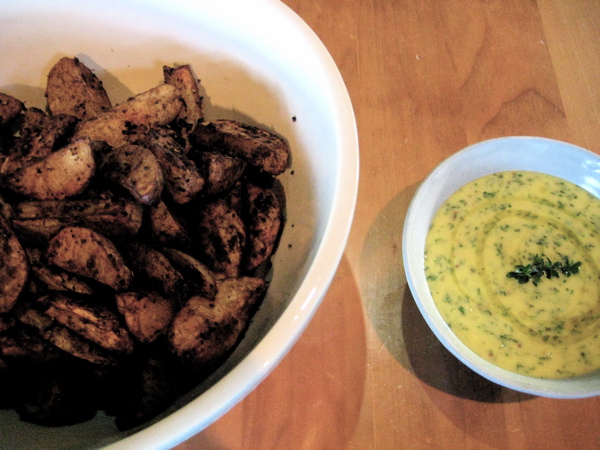
To make these wedges you have to be prepared to go a bit wild in the spice cupboard. They are usually different every time I make them. This is probably depending on which spices aren’t too far back and hard to reach in the cupboard, but I will do my best to give you something to follow. I would also like to stress here that there is definitely room for personal touch. Sometimes I have made them with lemongrass, sometimes not, sometimes with cumin, sometimes not, sometimes with turmeric, sometimes not, sometimes with garam masala, sometimes not and so on. However, I think the lemon juice, zest and cinnamon are great ingredients to add an intriguing flavour.
I have provided an aioli recipe to go with the wedges but they are just as good with chutney or the like.
Spicy Wedges (Serves 4 – 5)
2 kg potatoes
2 tsp cinnamon
1 tsp paprika
2 tsp whole cumin seeds
2 tsp ground coriander seeds
1/2 tsp chilli flakes
1 1/2 tsp salt
Zest and juice of 1/2 a lemon
80 ml oil
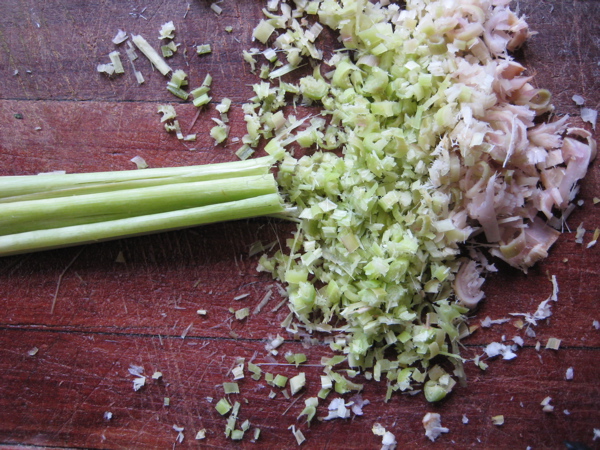
1 stalk lemongrass beaten with the back of a knife and chopped finely
Pre-heat the oven to 200°C. Wash the potatoes and cut into wedges. Place the potatoes and all the rest of the ingredients in a large bowl. Mix until the potatoes are coated evenly.
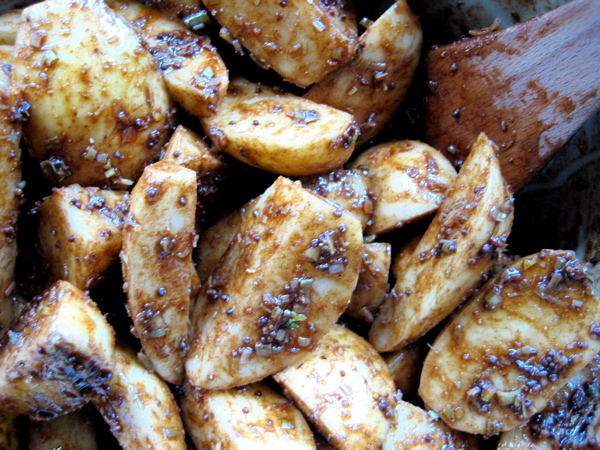
Place the potatoes on two large baking trays making sure all wedges are touching the tray. Bake for 1 hour if using a fan forced oven, a bit longer if not.
Aioli
2 egg yolks
1 cup light olive oil or a combination of stronger olive oil and sunflower oil
3 Tbsp lemon juice
1 tsp mustard
1 tsp lemon zest
2 cloves crushed garlic
A big handful of fresh herbs. I used parsley, oregano and thyme.
Place the egg yolks and 2 Tbsp lemon juice on a large plate and stir well with a fork. Add the olive oil very very slowly, stirring well with the fork after each drop.
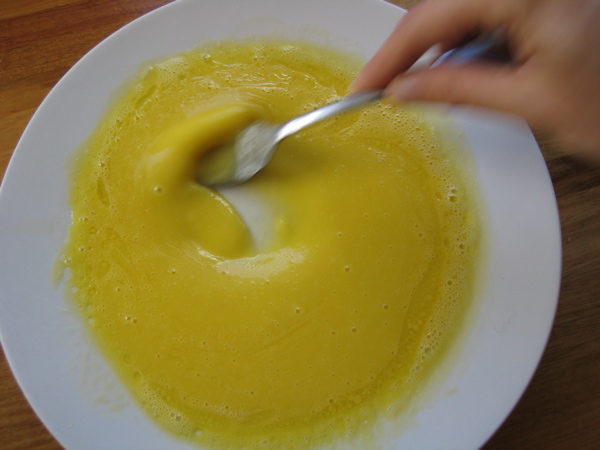
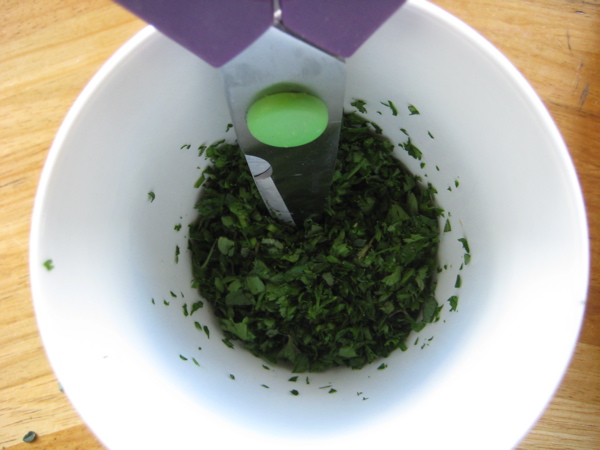
Once all the olive oil has been added, stir in the remainder lemon juice, zest, garlic and mustard. Finely chop the herbs and add these too.
(If you want to cheat and buy a good quality mayonnaise and add garlic lemon juice, zest and herbs to make your aioli, I promise I won’t tell anyone. I have been guilty of this too).
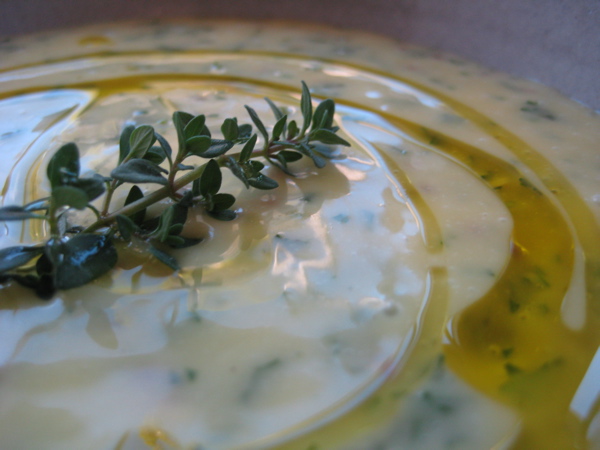
Serve in a bowl alongside the wedges.
Enjoy!
Everything Pink: Chocolate Beetroot Cupcakes
February 22, 2011 § 3 Comments
Pink is beautiful! I have only just noticed this.
My love affair with pink has crept up and surprised me, slowly taking form, settling into the back-seat of my mind, organising itself, getting comfortable before revealing itself to me.
Perhaps the seed was planted recently when I loved the paper curtain in our laundry.
Floral and patterned and pink.
Or when I started taking photos of pink roses.
Velvety and creamy and pink.
Or perhaps it was some years ago when I bought this dress.

1950’s and vintage and pink.
Or way back when I admired the stain of beetroot on everything it touched.
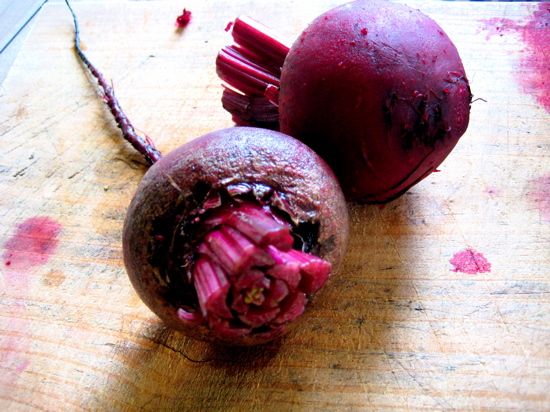
Bright and earthy and pink.
Either way, I have been told that pink is the colour of universal love and you should bring pink into your life when you want calmness, relaxation, acceptance and contentment.
Well that suits me just fine. Any excuse to make Chocolate Beetroot Cupcakes in a pink dress!
Recipe for Chocolate Beetroot Cupcakes with Orange Spiced Chocolate Mousse Topping
200 g dark cooking chocolate, I used Green and Blacks Organic 85% Cocoa
80 g butter
200 g dark brown sugar
3 free range organic eggs
1 tsp pure vanilla extract
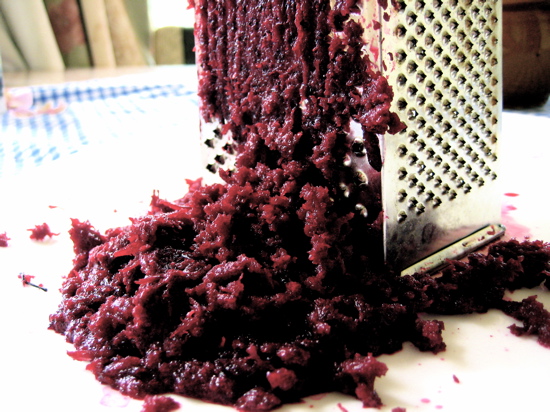
200 g raw beetroot finely grated
1 Tbsp natural yoghurt
Dash of milk if needed
80 g almond meal
80 g plain flour
2 tsp baking powder
1/2 tsp cinnamon

Method
Pre-heat oven to 170°C/340°F
Melt the chocolate in a bowl over a saucepan of boiling water.
In a large mixing bowl cream together the butter and sugar. Add the eggs and vanilla extract and beat until fluffy. Mix in the grated beetroot, yoghurt and milk. Add the melted chocolate and combine well. Add the almond meal and sift in the flour cinnamon and baking powder. Stir until just combined.
Place 16 – 18 cupcake cases in a muffin tray. Spoon mixture into the cases until about 3/4 full.

Bake for 25 to 35 minutes or until cooked when tested with a skewer.
Chocolate mousse topping
100 g dark chocolate (85% cocoa)
200 ml sour cream
Zest of 1/4 orange
1 tsp pure vanilla extract
Pinch ground cloves
2 Tbsp honey
Method
While the cupcakes are cooling, make the topping by melting the chocolate along with the orange zest in a bowl over a saucepan with boiling water. Remove from heat and gradually stir in the sour cream. Add the cloves, vanilla extract and honey and smooth over the cooled cupcakes. Store in the fridge.
Enjoy!!

Because there was Silverbeet
February 16, 2011 § 2 Comments
I went to a friend’s house the other day and there in their front garden was the biggest chilli bush I had ever seen. It was about one and a half metres tall and covered in chillies red and green. Apparently they grow like this in the tropics and apparently that is just the kind of summer we have had here in Melbourne whilst I have been away. Tropical at 37 degrees south! Everything is growing, growing and growing. The grass fluorescent green is impossible to keep restrained, the tomatoes race to rot before they are picked and the silverbeet with huge happy leaves laughs in the rain and sun.
I woke up this morning and new I couldn’t ignore it any longer. It needed eating. And because it is the middle of the week it needed to be something quick and easy. So here is something very simple for a fresh summer breakfast when you want something a bit more than just toast or muesli.

Silverbeet and Tomatoes with Lemon and Almonds on Sourdough (serves 2)
Olive oil
2 cloves garlic roughly chopped
1 tsp fresh ginger roughly chopped
6 – 8 big silverbeet leaves washed and roughly chopped
A big handful of tomatoes roughly chopped
2 Tbsp tamari (if you don’t have tamari soy sauce will do)
A lemon
Small handful of almonds roughly chopped
Salt and pepper to taste
In a large skillet, lightly sauté the garlic and ginger in a little oil. Add the silverbeet and cook until it just starts to wilt. Add the tomatoes and tamari and continue to cook until the tomatoes just begin to become soft but still hold their shape. Season with salt and pepper. Serve on sourdough toast with a squeeze of lemon juice and sprinkle of almonds.
Enjoy your day!!
What it Means to be Perfect: Chocolate coated dried plums marinated in white wine and a hint of thyme
February 11, 2011 § 9 Comments
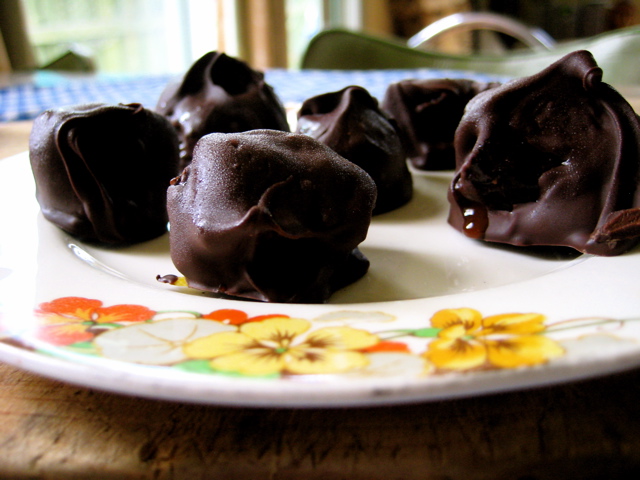
Chocolate coated dried plums
When in Belgium I went to visit my great aunty and uncle Yvonne and Jos in the small town of Bellingen. Oom Jos just turned 90 and Tante Yvonne isn’t far behind. We ate cake with a fork and knife before a dinner of witlof wrapped in ham and baked in snowy white sauce. This is a very traditional Flemish dish. As a child I was always glad witlof was so hard to find in Australia so it rarely ended up in my mother’s kitchen. But now I enjoy it in small amounts provided there’s plenty of ham and sauce to go around.
During the Flemish conversations around the dinner table I mostly daydreamed at the paintings on the wall and marvelled at the young spirit of my aunt and uncle gossiping and laughing about the local goings on. At one point, the conversation briefly turned to English and my uncle proclaimed,

Tante Yvonn and Oom Jos
‘No one is perfect.’
Then after reflecting on this statement for a while he continued,
‘Except for my wife! She is Perfect. She cleans and cooks all day. She is perfect… only problem is she has no time for making love. She is too busy. She never has time to kiss me.’
I am always struck when I see an old relationship full of humour, love and adoration like this one, a little reminder that life can indeed be great, full of warmth and happiness.
So because the conversation here is about love and perfection and because it is almost Valentines Day and because I am sadly alone with my darling still in Africa, I have decided it is most suitable I share this recipe so perfect and delicious it will make you weak at the knees and your heart melt. Well at least I hope so.
I got the idea of chocolate covered prunes from Stephanie Alexanders book The Cooks Companion. She stuffs them with almonds and soaks them in brandy. I have adapted it some by using white wine and adding a few little bits and pieces for extra freshness. I think the thyme and lemon zest brings something unique and light to the richness of the chocolate. I also changed the terminology a bit because for something with a valentine spirit ‘prunes’ doesn’t really have the right um… connotations in regards to some of its well known uses. Dried plums on the other hand….
Recipe for Chocolate Coated Dried Plums

You will need
30 pitted prunes
30 almonds
3/4 cup white wine
Juice of an orange
Sprig of thyme
Zest of 1/4 of a lemon
200g dark cooking chocolate
Stuff an almond into each prune where the pip would have been and place in a bowl along with the white wine, orange juice, thyme and lemon zest. Allow to soak for 1 – 2 hours then drain well.
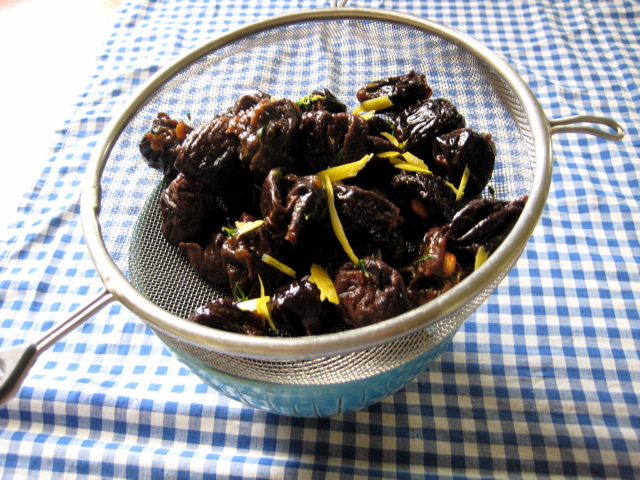
drain well
Melt the chocolate in a heat proof bowl over a saucepan of boiling water.

Melted chocolate
Dip each prune into the chocolate. Allow to cool in the fridge on a tray covered with baking paper until the chocolate sets.

Allow to cool on baking paper
Serve on a pretty plate and eat with someone special.
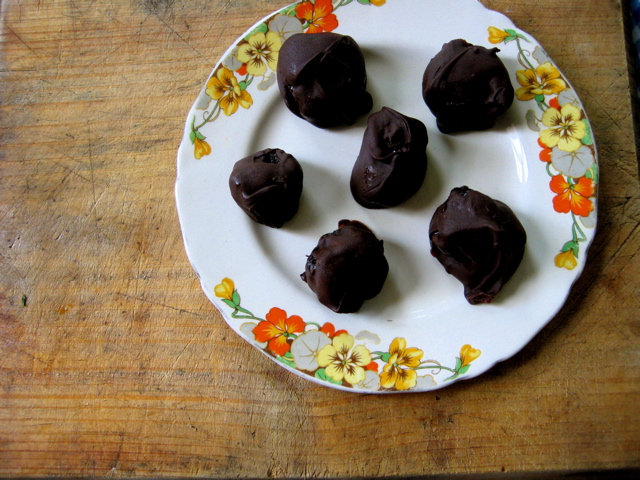
Enjoy!!
Belgian Memories
February 7, 2011 § 6 Comments
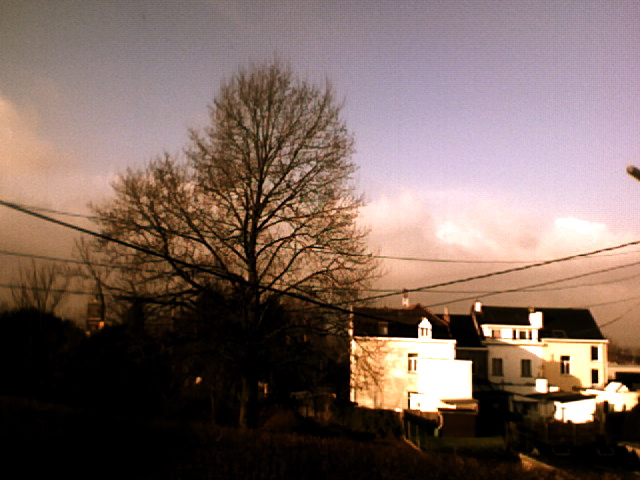
Belgium, full of the smells of my Oma; mashed potatoes with nutmeg, that particular washing detergent, that special smell of cold icy weather, cigars, sausages and green shrubs. Not that my Oma smoked cigars but that is the smell of Belgium that is so intertwined with the memory of her in my mind. And it is bitterly cold. I have been sleeping in a jumper, woollen pants, socks three blankets and two quilts.


Here on the outskirts of Brussels in the brown fields mixed with old houses and ever multiplying industries and shopping complexes, I stay with my uncle in the old family home. This is the house that my great grandparents built alongside their fields that they passed on to my grandparents and they to my uncle. The narrow street leads from the canal to their shrub-lined driveway with that very particular smell. The church on the other side rings memories of being a child. The graveyard where they are all buried lies across the field of what was the old rose nursery that is now lying bare and empty.


I have a week here of wandering the streets of Brussels, peering in the shops filled with chocolate and tempting pretty things and watching people in the warm lit old wooden decorated cafes. I have been practicing pretending I know French and am oh so bourgeois. Mainly by not saying anything other than the simplest phrases and guessing what other people are saying when they speak to me. It’s always fun when I get away with it.

Stupidly in my mad rush to leave Australia in five hours which you can read more about here, I decided not to bring my camera which was fine in Salone as I could use D’s but much regretted now that he is not here. I have been taking these photos with the web cam on my laptop. I have been too embarrassed to do it anywhere too public so these are all just taken from around my uncles place. It is impossible to frame a picture without my head getting in the way so they end up being random and wonky most of the time but in their own way they have a certain charm.

Beaches Bikes and Brake Failures
February 3, 2011 § 2 Comments
On reflection, I still feel a little guilty; apart from this little attempt, I have done a completely terrible job at giving you much of an indication of the cuisine in Sierra Leone. To ease my guilt I can say, well, it’s already been done. In case I have left you curious and wanting, look here for a detailed effort on many of Salone’s dishes. But the real truth is there are just so many other more exciting things to write about. You have to trust me on this one; food is definitely not the countries strong point. Although I cannot say the same for my last five days in Sierra Leone spent on the beaches of the peninsular.

Tokeh, River #1
To get to the beaches we take bikes. The going is fast and dusty, the mountains rising from the sea swallowing us up forested and deep. We stay at different places along the way sleeping in little thatched huts on the sand with mattresses made of old rice sacks stitched together and stuffed with grass. The water is bath like warm as we float in its blue and green. We laze in the shade of the palm trees sharing the beaches with the fishermen and their nets, their boats at sea tied to trees on the shore. The colourful wooden vessels are sharp-nosed and slim with names like “Believe in God”, Jesus is in the Boat” and “ Movement of Jah People” painted on their sides in blue and yellow. They have a certain knack for names here, At John O’bay we meet a Mr. Perfect, and at Bureh a Prince William, just to name a few. In this tropical paradise we dine on fish, lobster, crab and oysters plucked straight from the sea.

We spend two nights in York staying with the Whale Foundation an NGO that works in the area. York was built by freed slavers once slavery was abolished (look here for more info). The town escaped the burnings of the civil war and the old buildings charm us, tall, wooden, shuttered and dilapidated. The windows look into shadowy insides, floating with curtains of blue and pink printed roses that are pleasing against the faded and pealing salmon pink and brown of the houses.

York
Each night we can see the lights of the illegal fishing boats out at sea. They pay bribes to the navy and the ministry of fisheries to rape the seas with their trawlers and fishfinder radars. The locals are no competition with their leaky rigs and nets that they scare the fish into by rhythmically drumming the sides of their boats. They tell us how the illegal boats will attack them and cut their nets if they get too close. They have noted the dwindling fish stocks since the illegal boats arrived. Now the locals need to go further and further for their daily catch. We meet a man from the Environmental Justice Foundation an NGO that do research and work in the area trying to stop the illegal fishing and to protect the local people from its effects. The foundation provides very interesting information and videos that you can find here.

Sadly our beautiful time on the beach, warm and relaxed, toes up in the sun, comes to an end. Heading back to Freetown from Tokeh we can only find one bike. So it is D, me, our bags, a big bundle of water under my arms and the driver all atop the Honda. The drivers slow and careful pace pleases me, until, that is, we start going down a hill and discover that the brakes don’t work!!! I look down at the bottom of the hill, an eroded and bumpy corner turning into a narrow concrete bridge with no railings over a rocky river. As we begin to gather speed, I notice that the driver has begun to direct us in the direction of the jungle on the side of the road. D, me, our bags, the big bundle of water under my arms, the driver and the Honda crash into the dense green scrub, sharp thorny branches breaking our fall, the bike falling on our legs. Lucky we’re only left with a few bruises and scratches. Somehow I don’t feel overly fazed. I must be getting used to break failures. This is our second one in less than two weeks. The last one leaving me petrified rolling backwards down a steep hill and a nasty cut on the underside of my big toe. I lose my shoe when I try to launch myself off the bike to what I think is safety. As a result, I get stuck, my foot dragging on the gravel as D desperately tries to pull me back on before my leg goes under the wheel. In hindsight I didn’t react in the most sensible manner. However, at the time it seemed better than continuing backwards down the hill! I had already calculated in my head approximately how fast we would be going when we hit the corner and it was pretty damn fast, especially for reverse. But somehow with me half on and half off the driver put the bike into gear and turned it sideways brining us to a stop.
Back in the jungle lying in the thorns under the bike, we decide to get a lift in a red sports car that comes by in a timely manner. Covered in dust, the axle grinding and bumping along the road we make it to Lakka and from there to Freetown in a taxi.
That night I fly out of Sierra Leone leaving the warm weather and my darling D behind, but not forgetting a bout of gastro to accompany me my 20 hour flights and stopovers to Belgium. One last departing gift.
 the invisible cookbook